About the factory

Uniform Factory Making Custom Workwear and Staff Uniforms Since 2008

Staff uniform programs for companies that dress a whole workforce, and private-label production for uniform brands and distributors. From paper pattern to packed carton, every stage runs in one factory under a named person who signs it off.
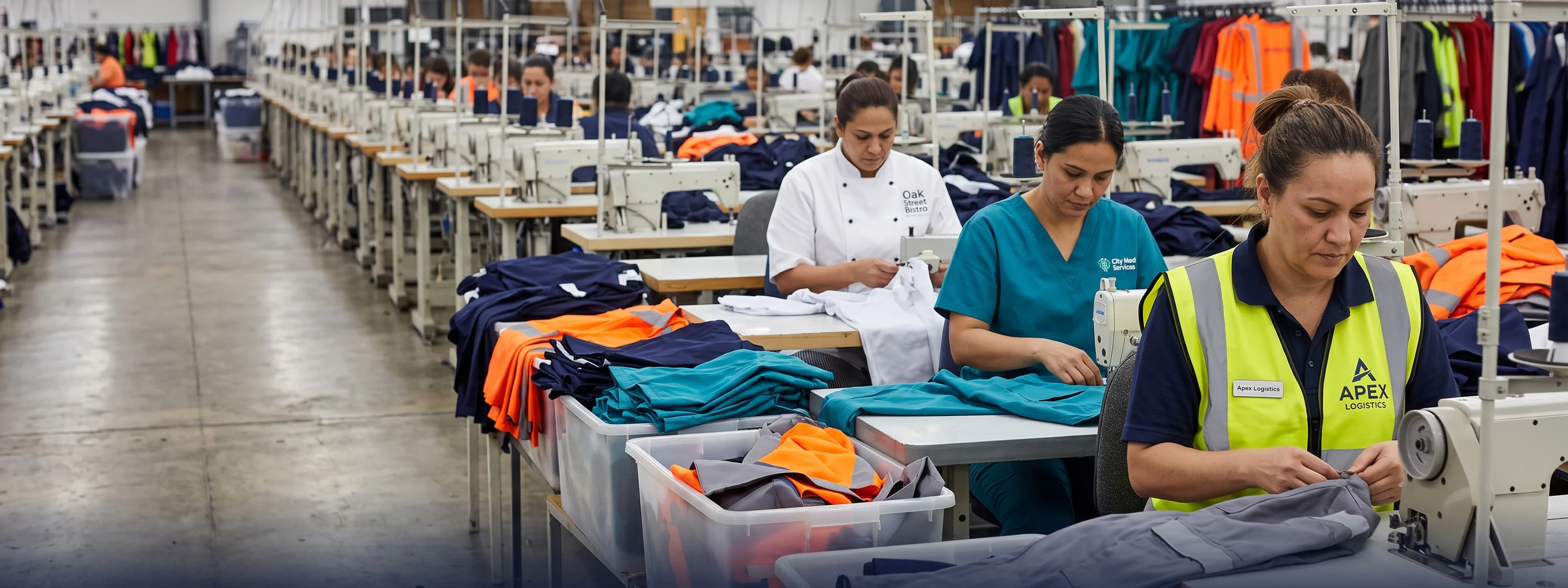
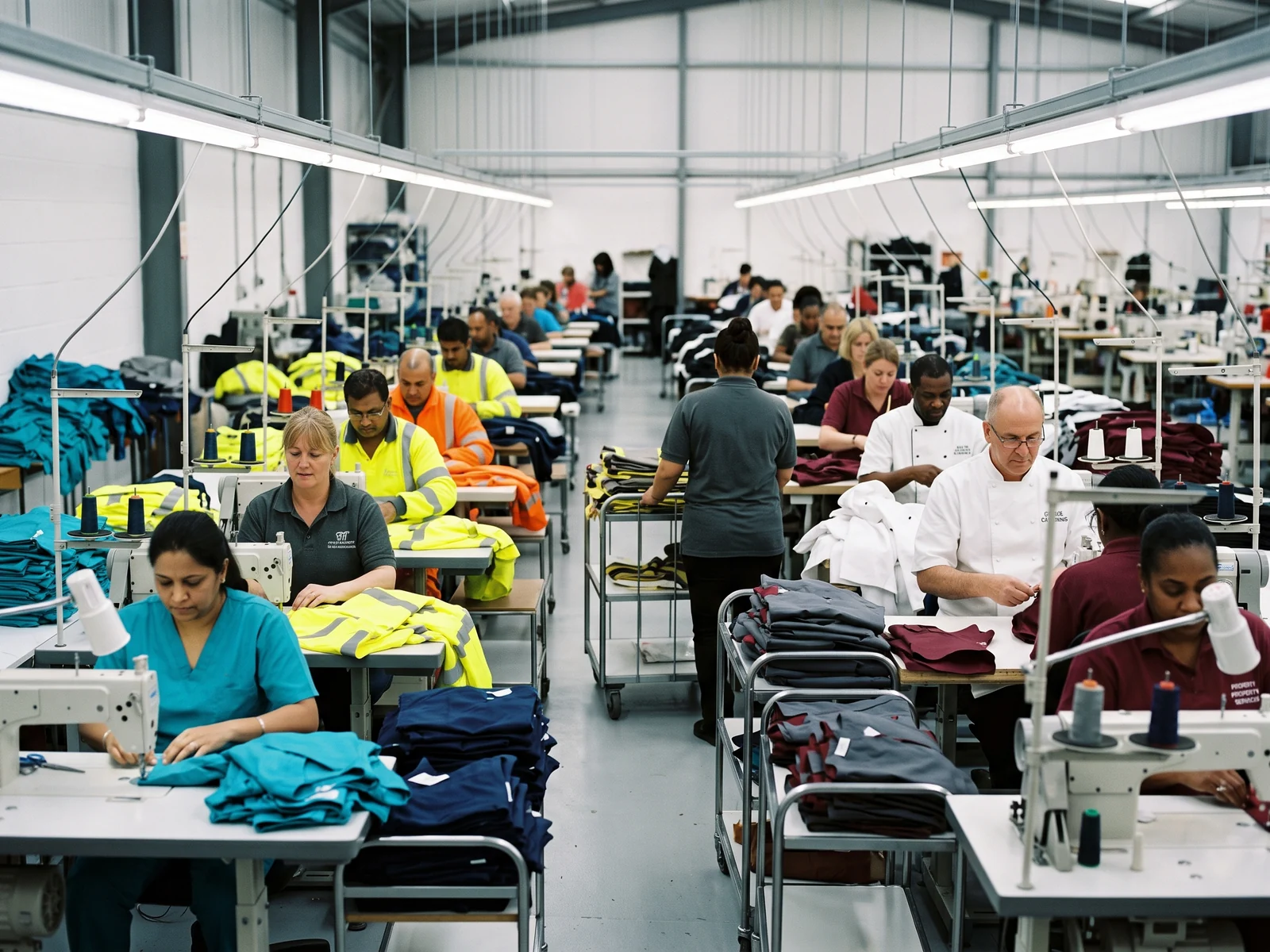
Sewing floor with rows of machinists stitching workwear in hi-vis yellow, teal and white fabric, lines stretching into the distance
  1. 01Fabric store
  2. 02Colour lab
  3. 03Pattern room
  4. 04Sewing
  5. 05Decoration
  6. 06Packing
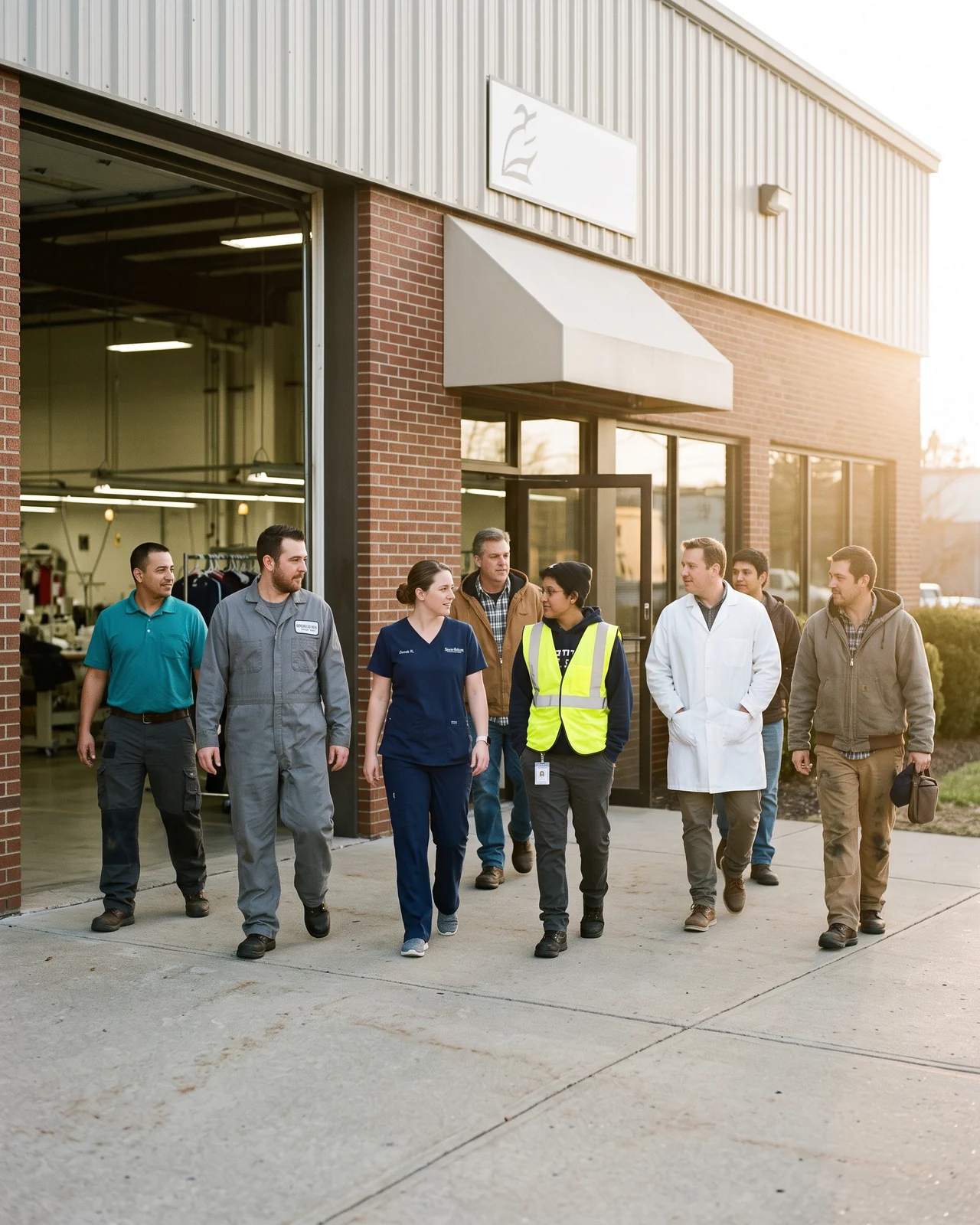
Staff arriving at the uniform factory entrance beside the loading bay in the early morning
EST. 2008CUT · SEW · DECORATE · PACK

01Profile

Uniform Factory Profile: 650+ Staff, 18,000 m², 300,000 Garments a Month

Founded as a cut-and-sew workwear factory, then built out one capability at a time, so a uniform order now stays in one building from the pattern table to the shipping carton.

People on our own payroll
650+
Factory floor under one roof
18,000 m²
Garments a month at full capacity
300,000
Countries receiving our programs
50+

Where we sit in the supply chain

Mills supply fabric and reflective tape, with their test report where a garment has to meet a named standard. From there the work is ours: pattern, cutting, sewing, logos and names, labels, inspection and packing.

Who runs it

Pattern makers, cutters, machinists, decorators, lab and QC staff and packers, with one account manager per program as your single contact.

What we make and ship

Workwear, hi-vis and FR garments, scrubs, hospitality and corporate uniforms. 97% of orders ship on the date confirmed at sample approval.

02Customer base

60% Staff Uniform Programs, 40% Private Label for Brands

Two kinds of buyer, each with its own production setup on the same floor.

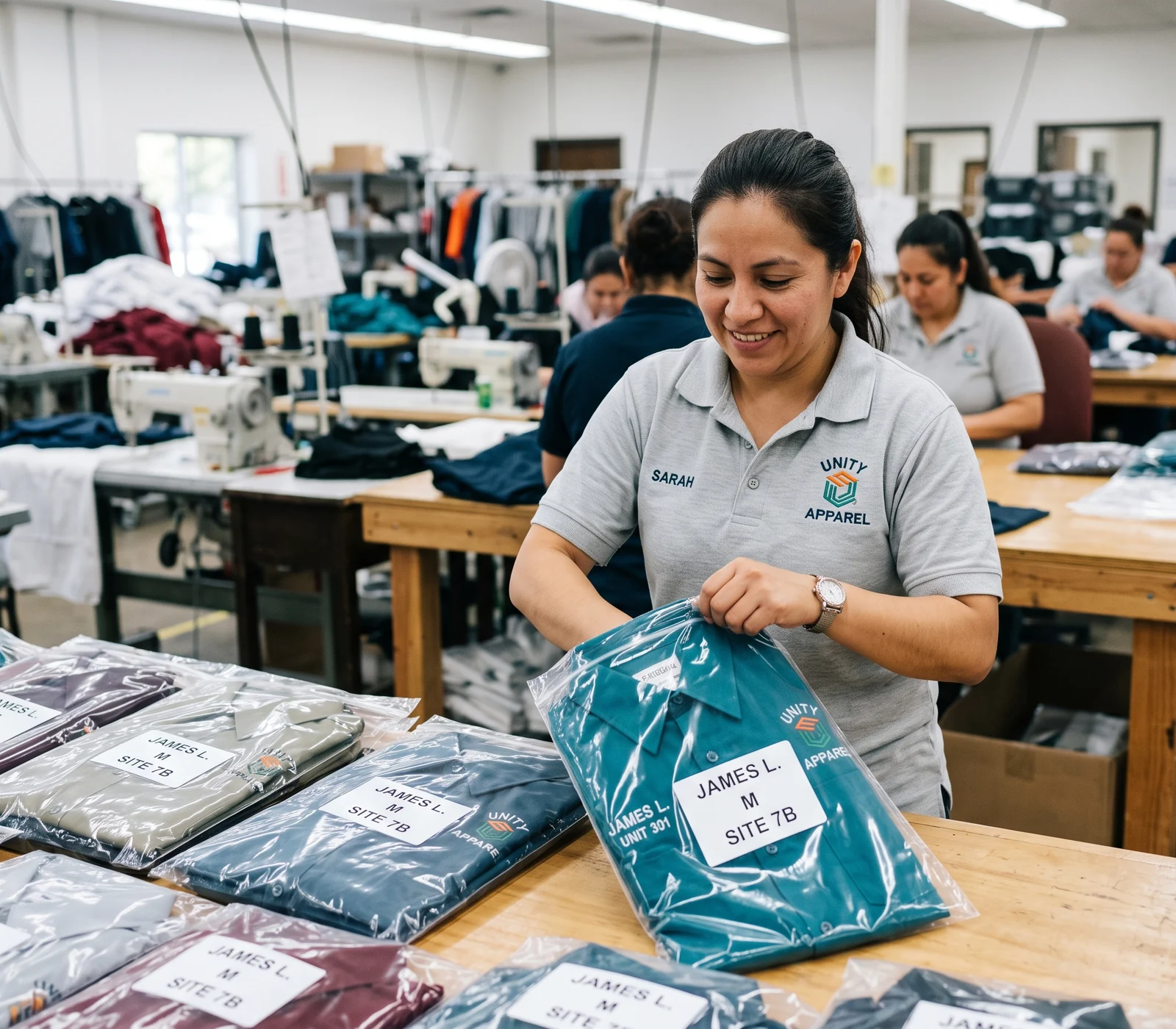
Packer placing a folded shirt into a bag labelled with an employee name, size and site

Staff uniform programs

Ordered directly by the corporate, healthcare, hospitality and industrial employers who wear them. They run through the pack-by-person line, where each garment is packed for the employee who will wear it.

Private label for brands and distributors

Made to order under the brand's own woven neck labels, care labels and patches, so the garment reaches the brand's customer carrying only the brand's name.

Buyer types and program models on the home page

03Company history

Six Milestones From 6 Sewing Lines in 2008 to 24 Today

Each step added something the factory could not do before.
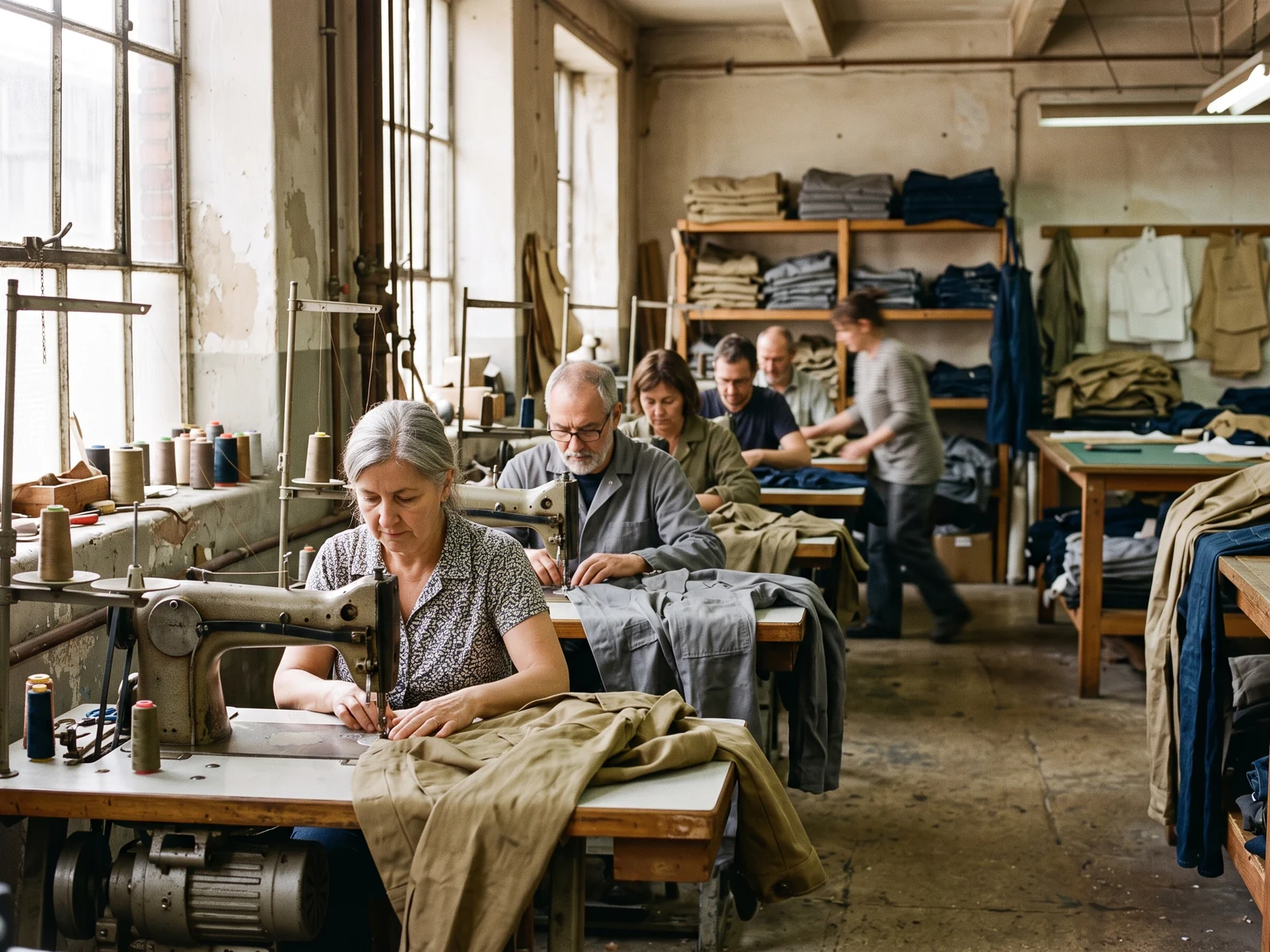
Early cut-and-sew floor with a single row of sewing machines making plain work shirts
20086 sewing lines · plain work shirts, pants and coveralls
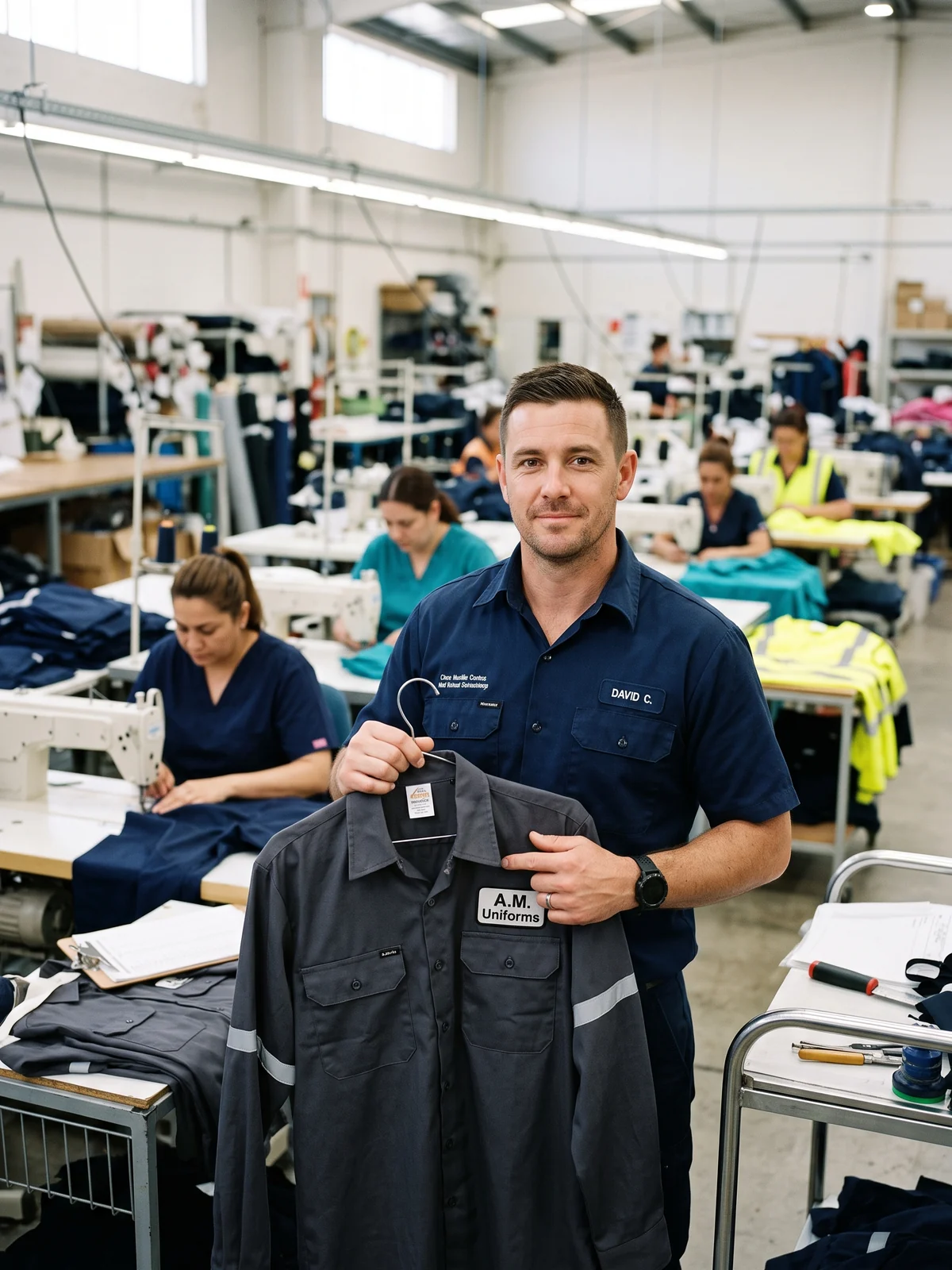
Modern sewing line today with machinists assembling multicolour uniforms
Today24 sewing lines · every garment type we make
  1. 2008
    Added

    Cut-and-sew workwear factory, 6 sewing lines

    From then on

    Plain work shirts, pants and coveralls made for importers.

  2. 2012
    Added

    Embroidery in-house

    From then on

    Company logos and employee names added without sending garments out.

  3. 2015
    Added

    Screen print, heat presses and reflective tape

    From then on

    Hi-vis garments made and decorated under one build spec, on one floor.

  4. 2018
    Added

    Colour lab

    From then on

    Re-order shade measured on the fabric before cutting. How a reading is taken

  5. 2021
    Added

    CAD pattern room and automatic cutting

    From then on

    Every re-order cut from the same marker file as the first order.

  6. 2023
    Added

    Pack-by-person line and private-label program

    From then on

    Multi-site rollouts and uniform brands served from one factory, now running 24 sewing lines.

04Colour lab

2018 Colour Lab: D65 Daylight, 10° Observer, ΔE2000 Before Cutting

The lab sits between the fabric store and the cutting tables. Every batch of re-order fabric rolls passes through it before it can be released to cutting.
Instrument specColour lab · since 2018
Light source
D65 daylight
Observer
10°
Formula
CIE ΔE2000Colour difference between new fabric and reference
Instrument
Spectrophotometer
Reference
Retained lab dipKept in the lab-dip library for that colour
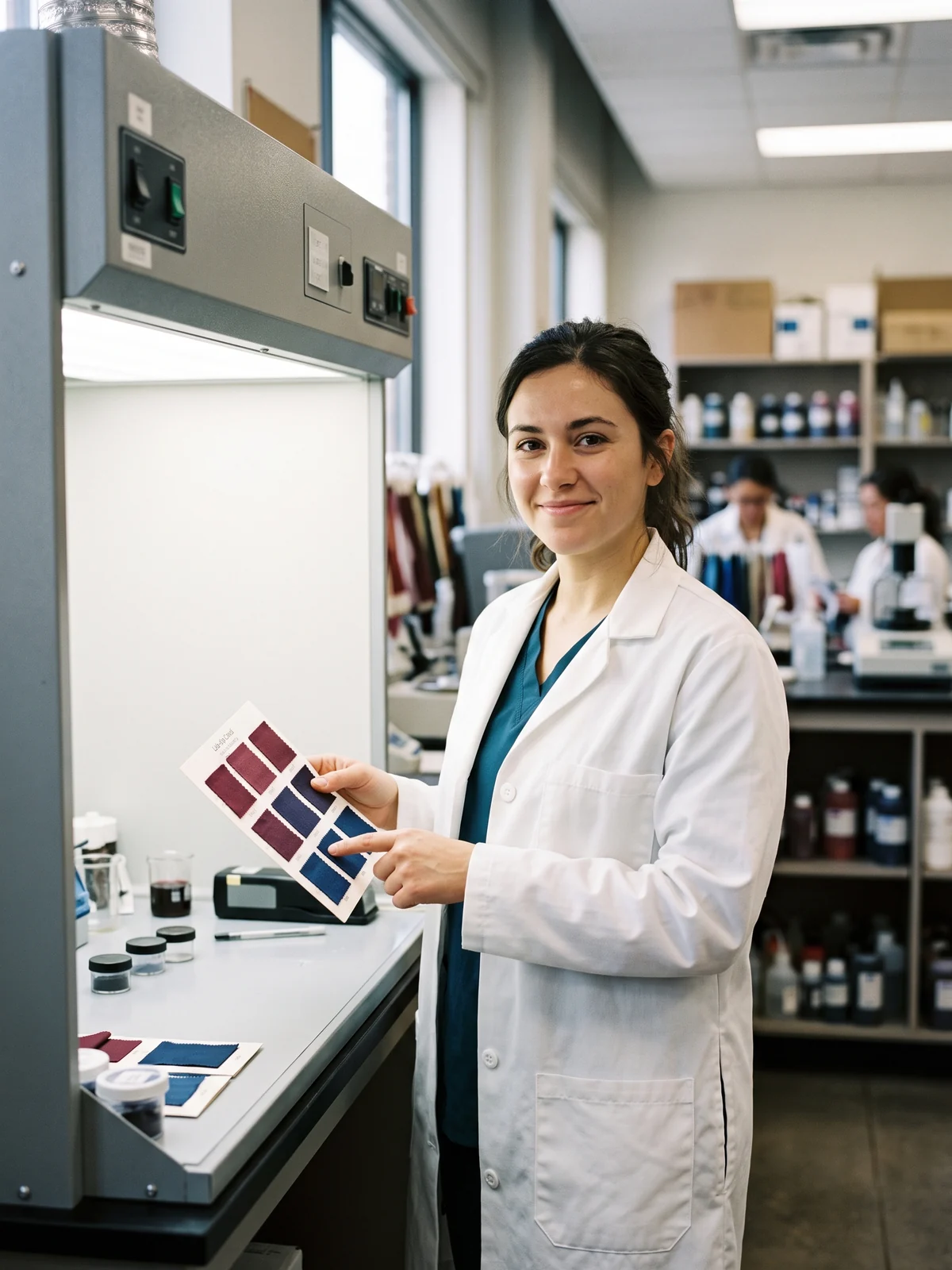
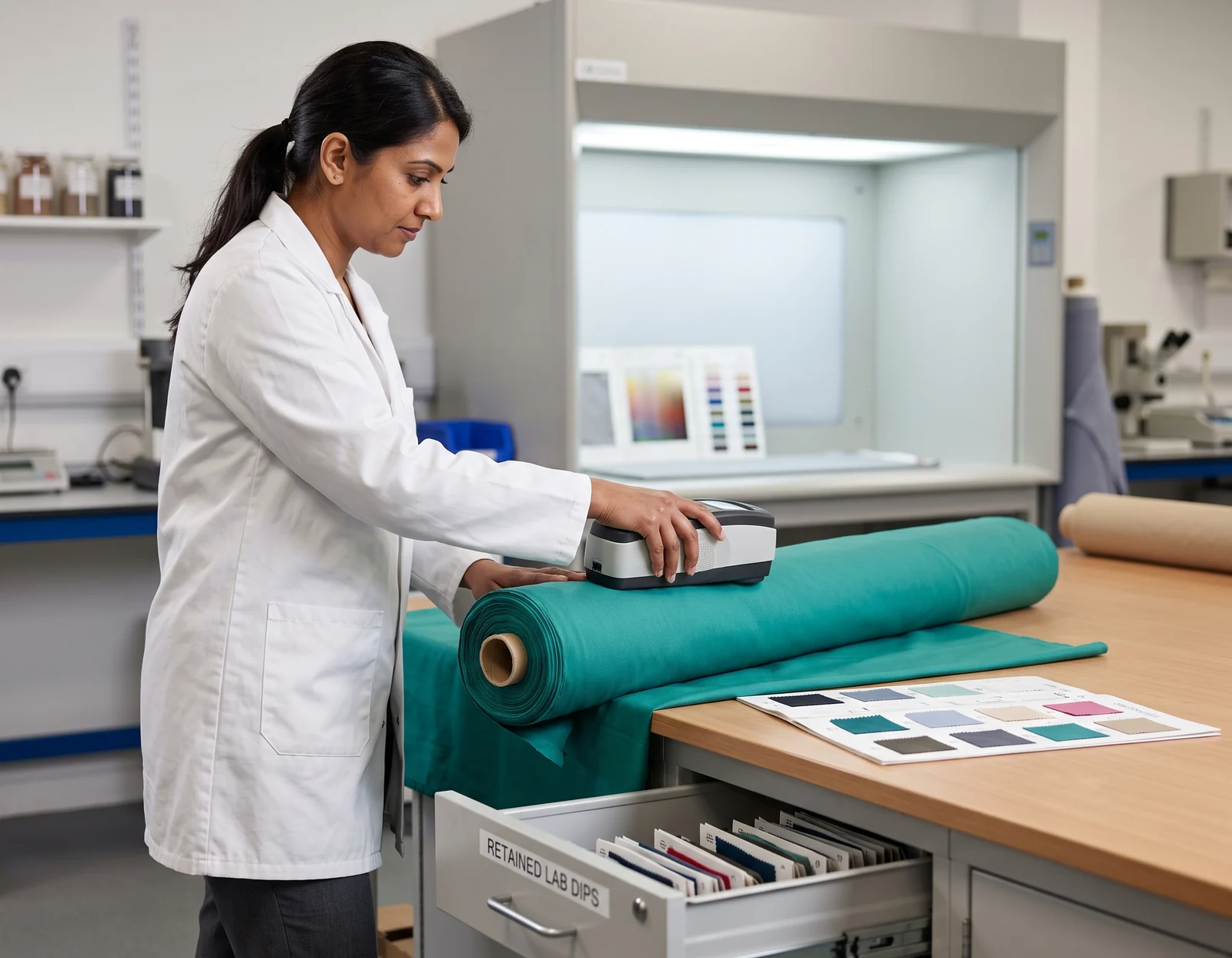
Colour lab technician pressing a spectrophotometer onto an uncut roll of teal fabric beside a lab-dip card
Who
The colour lab technician
When
Every re-order roll batch, on arrival, on the fabric itself while it is still uncut
Decides
Release to cutting, or hold the batch back

The lab-dip library

Every approved colour keeps a retained lab dip, with each delivery's dye lot recorded against it. On a re-order the technician pulls the lab dip the last delivery was matched to, so new fabric is read against the shade your staff already wear.

One light source, one formula and one physical reference for every re-order of a colour, for as long as the program runs.
Tolerance and the reading that ships with each re-order

05Operating rule

Colour Wins When the Ship Date and the Colour Conflict

  • 01Fabric that reads out of tolerance is never released to cutting to save a date.
  • 02The cutting room cuts only fabric the colour lab has released.
  • 03A held batch is re-dyed or replaced, and cutting starts only when the new fabric reads within tolerance.

What you hear, and when

If re-dyeing moves the ship date, your account manager tells you before cutting starts, with the new date and the reason, while the order is still fabric on a roll.

Why it runs this way

A program runs for years and new garments are worn next to old ones. The decision is made in advance, so nobody on the floor weighs a date against a colour under pressure.

06Equipment

Equipment by Year Added, From Sewing Lines to Pack-by-Person

Every machine below stands on our own floor and serves one stage of a program.

SinceAreaEquipmentUsed for
2008Sewing linesLine-by-line assemblyexpanded through every milestoneEvery garment type we make
2012Embroidery10 × 12-head machines120 headsLogos, badges and employee names
2015Screen printing4 automatic carousel linesLogos, back prints and program graphics
2015Heat transfer & reflective tape8 heat pressesHeat-transfer logos and segmented reflective tape
2018Colour labSpectrophotometerand retained lab-dip libraryReading re-order fabric before cutting
2021CAD pattern roomCAD pattern, grading & markersOne graded set and marker file per style
2021Automatic cutting2 multi-ply cutting tablesBulk cutting from the style's marker file
2023Pack-by-person linePer-employee packingname, size and site labelsMulti-site staff rollouts

07Process boundary

The Boundary Sits at the Fabric Roll: Four Stages Inside One Factory

Mills supply fabric and reflective tape. Every step after that runs inside our factory, with a named owner and a defined hand-over to the next step.
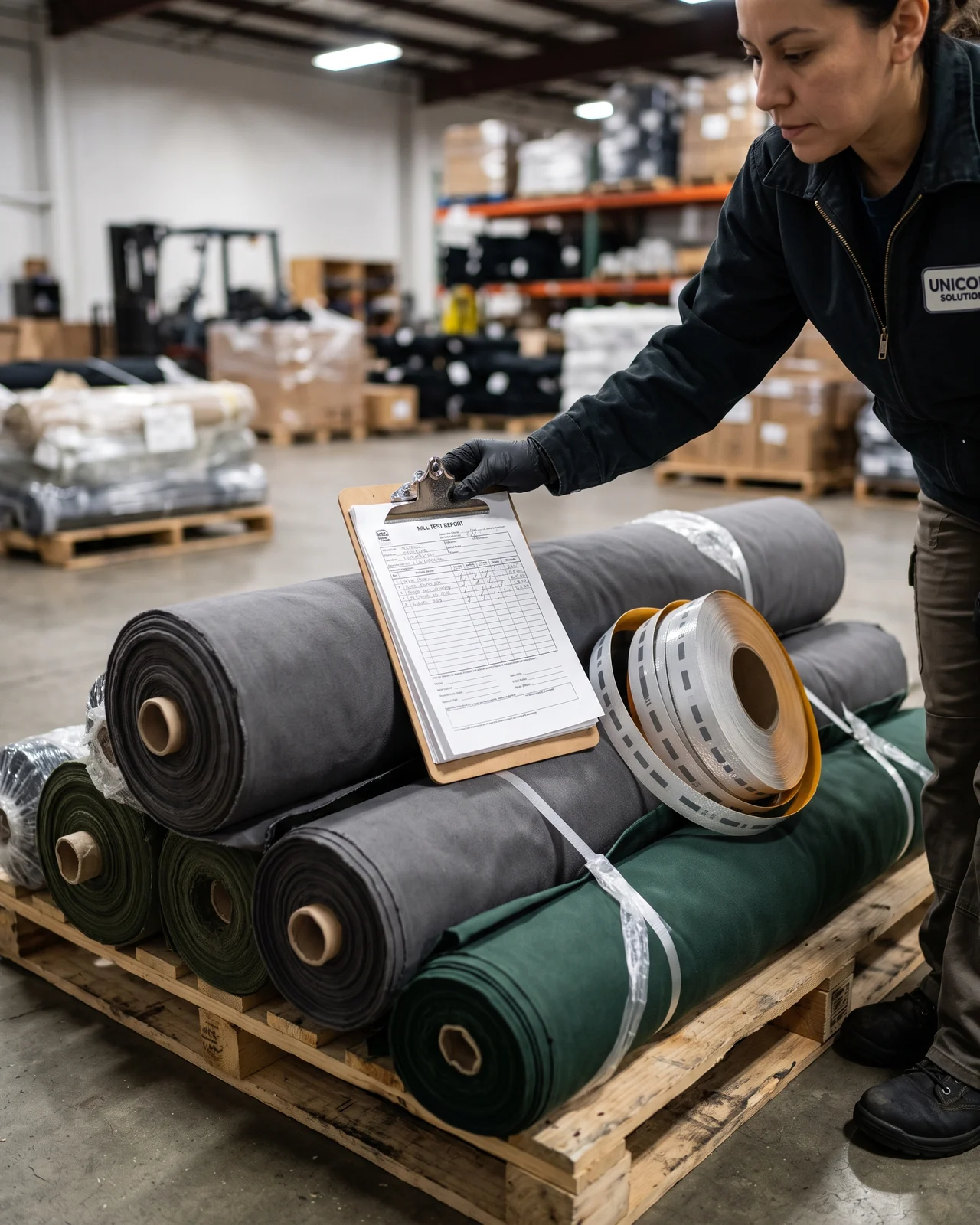
Rolls of fabric and reflective tape arriving from the mill with a test report clipped on top
Outside · in

Fabric & reflective tape

From mills, with the mill's test report for hi-vis and FR builds. OEKO-TEX Standard 100 fabrics available.
Fabric roll · boundaryInside our factoryCarton · out
  1. Pattern & cutting
  2. Sewing
  3. Logos, names & reflective trim
  4. Inspection & packing
Owner
Pattern room lead
What happens
CAD pattern signed, then bulk cut from the style's marker file
Hand-over
Cut panels with style, colour, size and dye lot
Why in-house
The marker file stays with us, so a re-order is cut from the first order's file
Owner
Line QC on each line
What happens
First piece off each line approved before bulk runs
Hand-over
Sewn garments to the decoration floor, same building
Why in-house
The approved sample and the line checked against it sit in one building
Owner
Decoration floor, working from the program spec
What happens
Logos, names, labels and reflective tape on our own machines
Hand-over
Decorated garments to final inspection
Why in-house
Names come from your staff list; hi-vis and FR trim follows the garment's build spec sheet
Owner
QC manager for release, packing line for cartons
What happens
Final release signed, then packing by carton or by employee
Hand-over
Labelled cartons to the freight forwarder
Why in-house
The pack line uses the same staff list as embroidery, so garment and pack carry one name
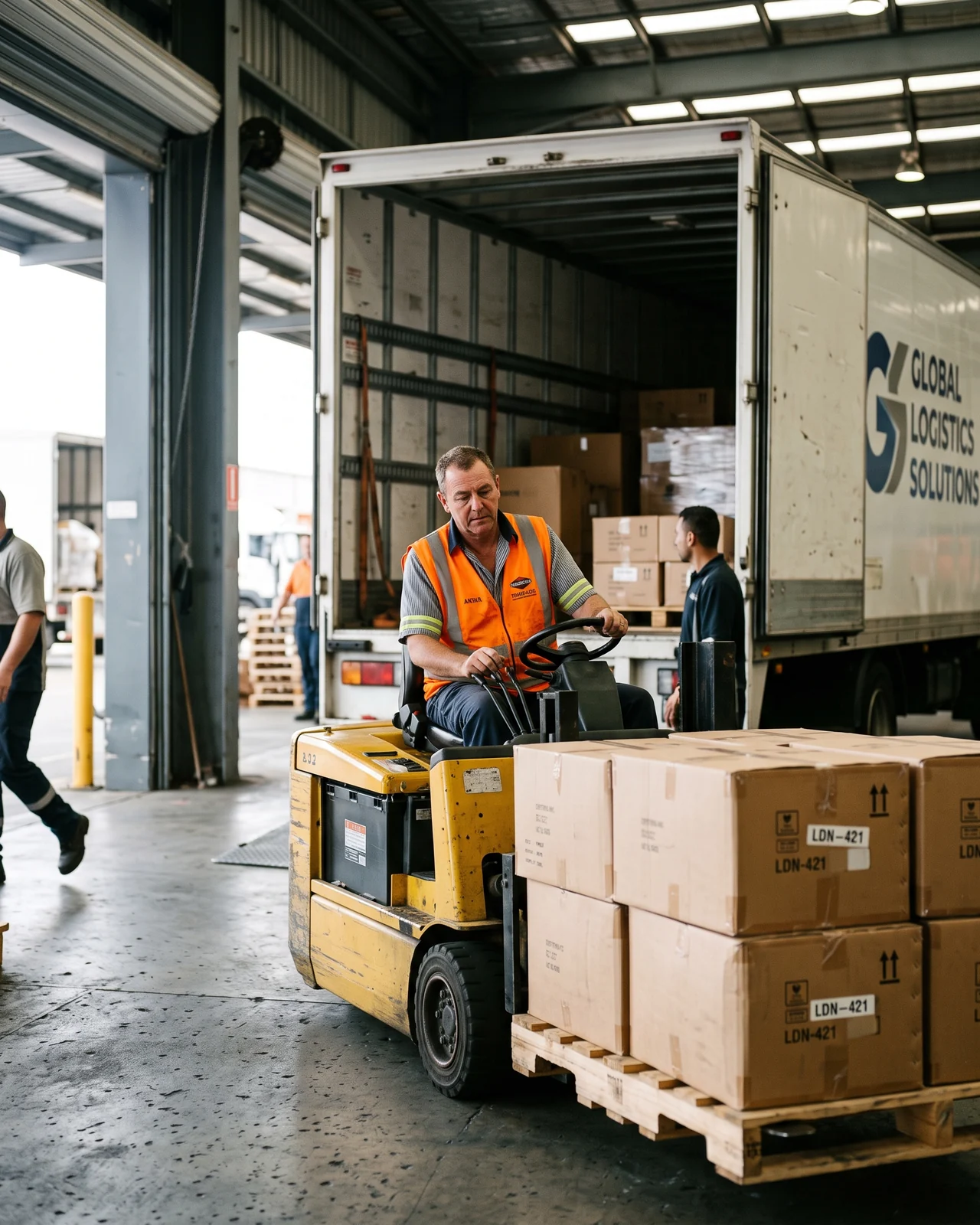
Labelled cartons of uniforms loaded by forklift for the freight forwarder
Outside · out

Freight & testing

Sea, air or express to the addresses you give us. Third-party garment testing arranged per order when a site or contract asks for it.

One factory answers for everything after the fabric roll.

08Core processes

Five Core Processes Run on In-House Equipment

Built and run by our own staff on our own machines. Each process does one specific job in a program, and each one is the reason a stage does not have to leave the building.
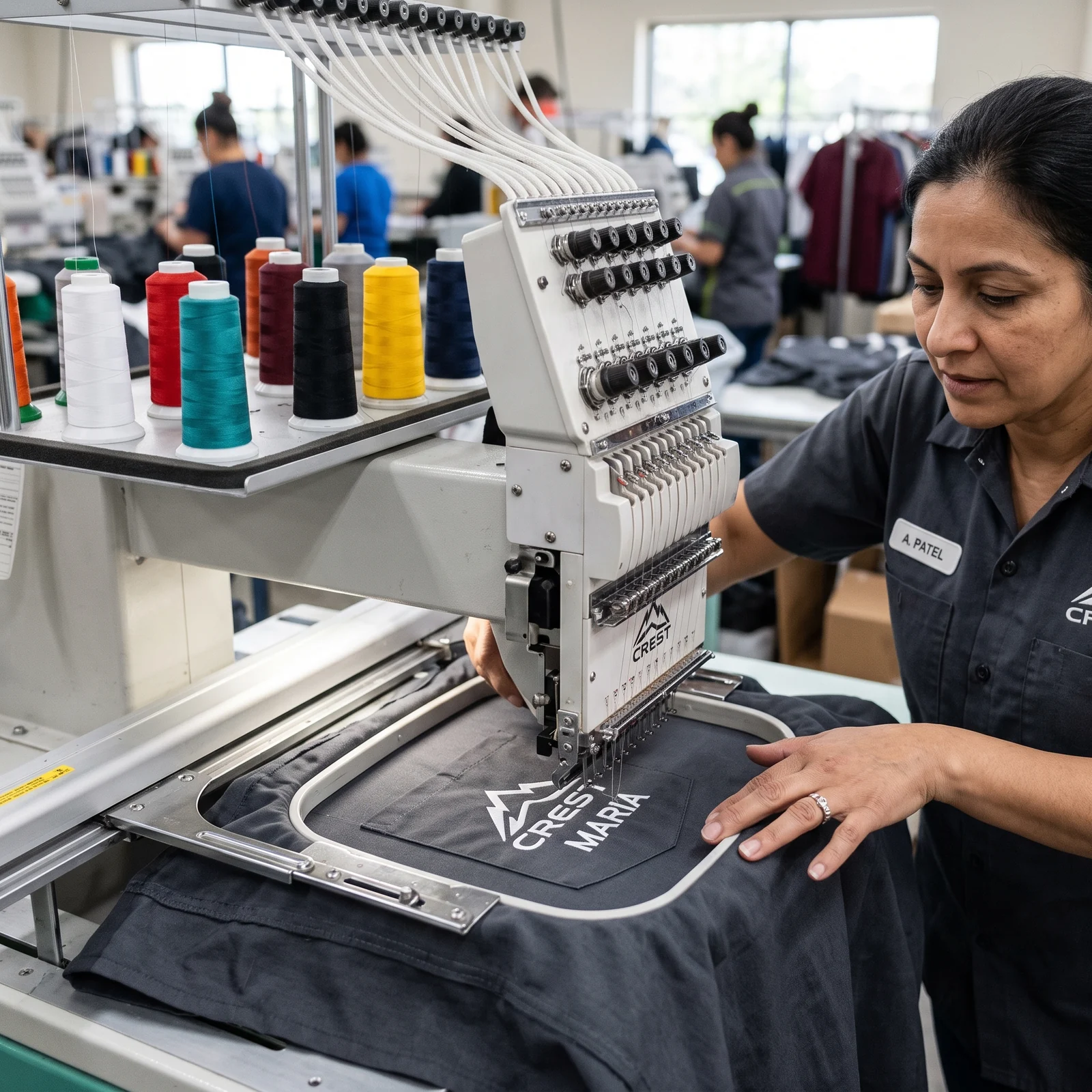
  • Embroidery head stitching an employee name onto a work shirt chest

    Employee names and IDs are stitched inside the bulk run, so a named program comes off one production order.
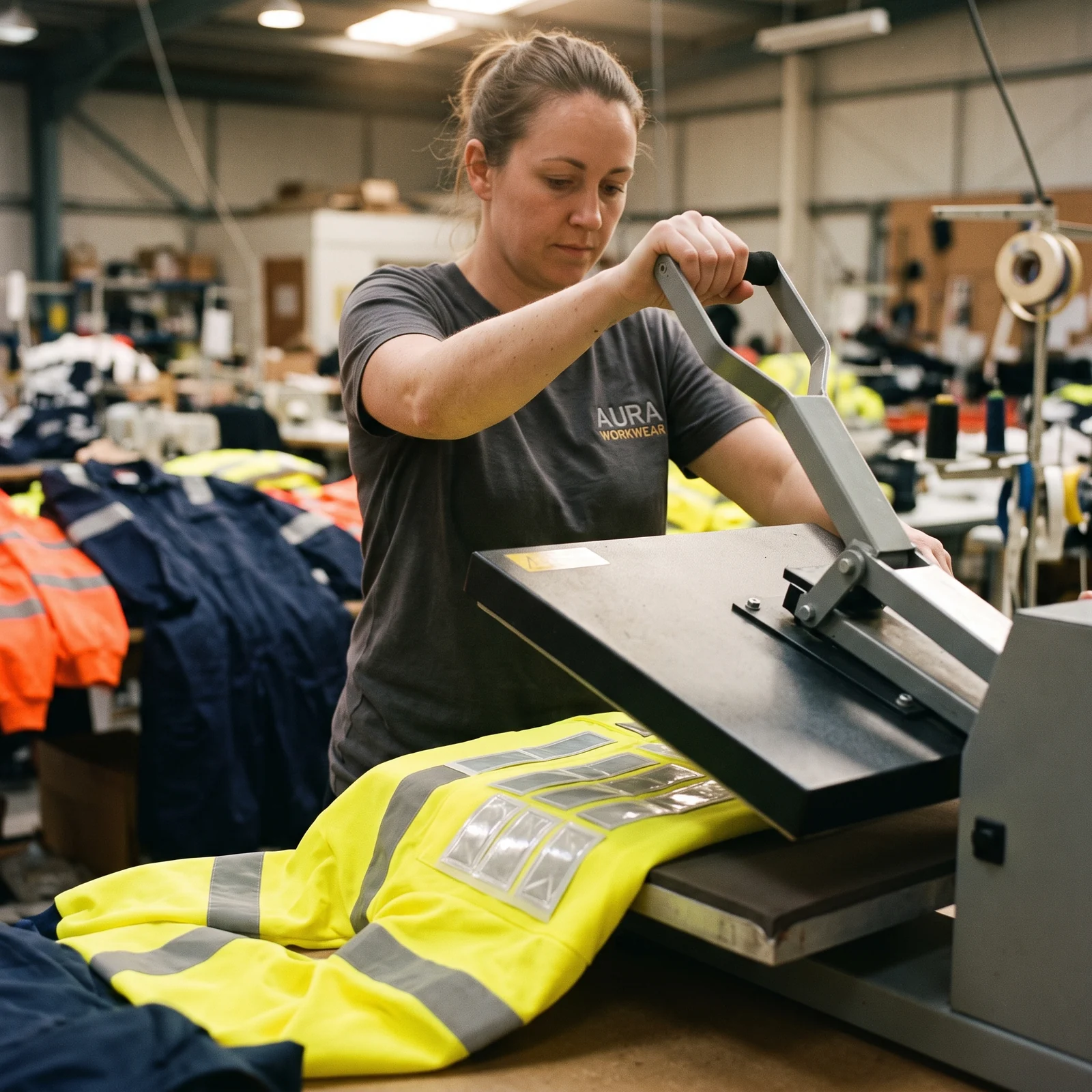
  • Operator heat-applying segmented reflective tape to a hi-vis jacket on a press

    Segmented tape is heat-applied on our presses to the same build spec the hi-vis garment is sewn to.
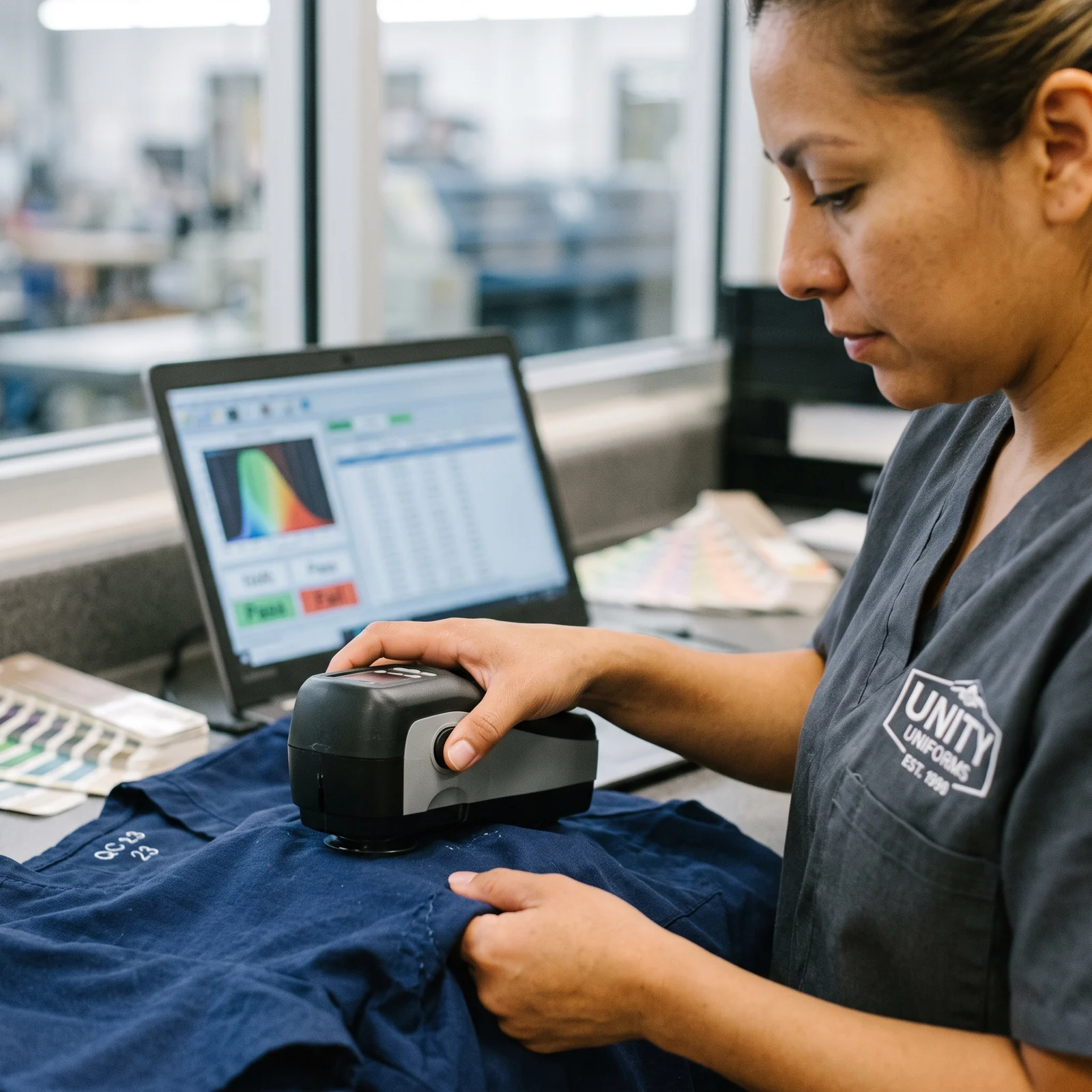
  • Spectrophotometer aperture on fabric beside a readout screen in the colour lab

    Re-order fabric is read under fixed conditions against a retained lab dip before any of it is cut.
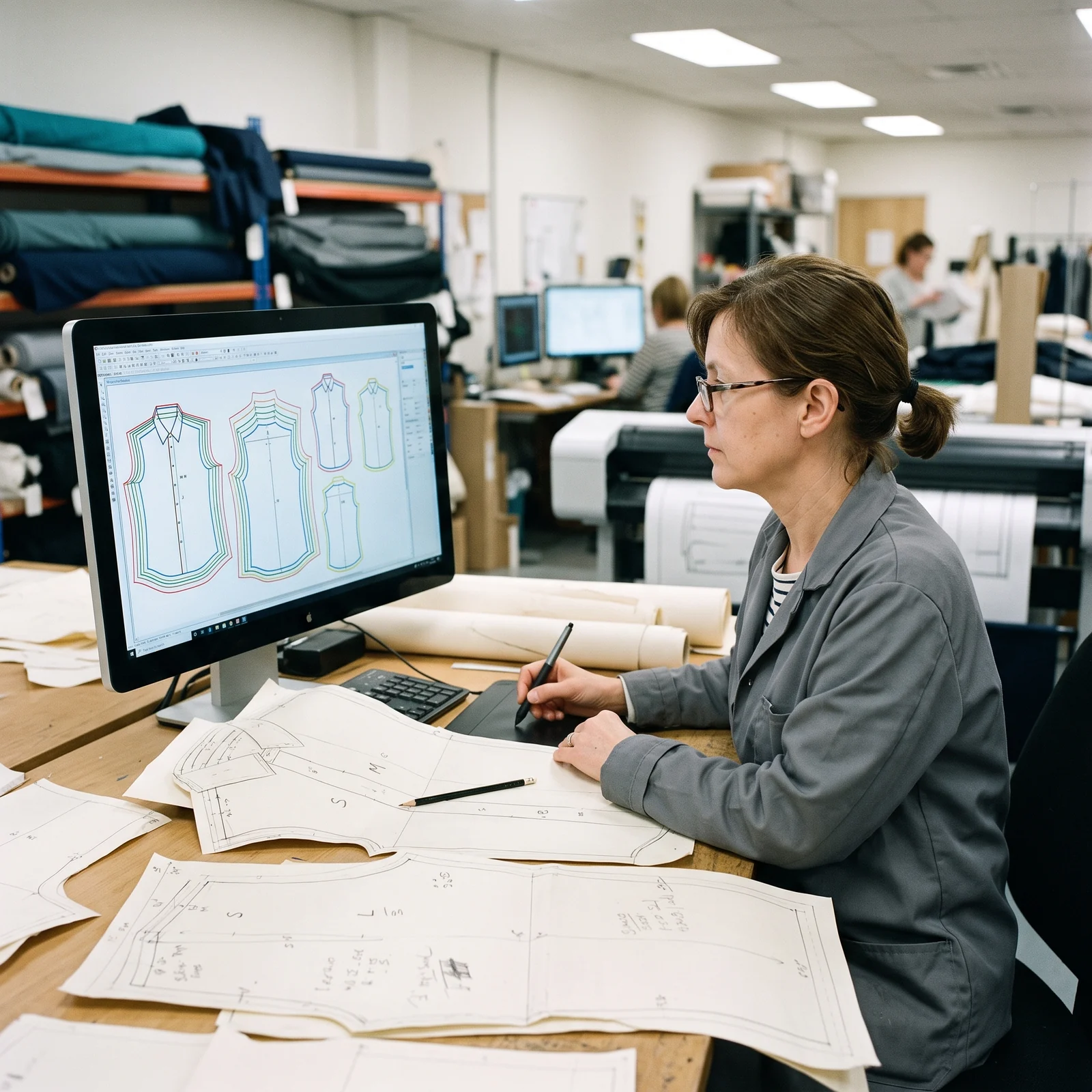
  • Pattern maker adjusting a graded pattern on a CAD screen next to paper patterns

    One pattern set per style, graded across every cut and size the program needs, with markers made in CAD.
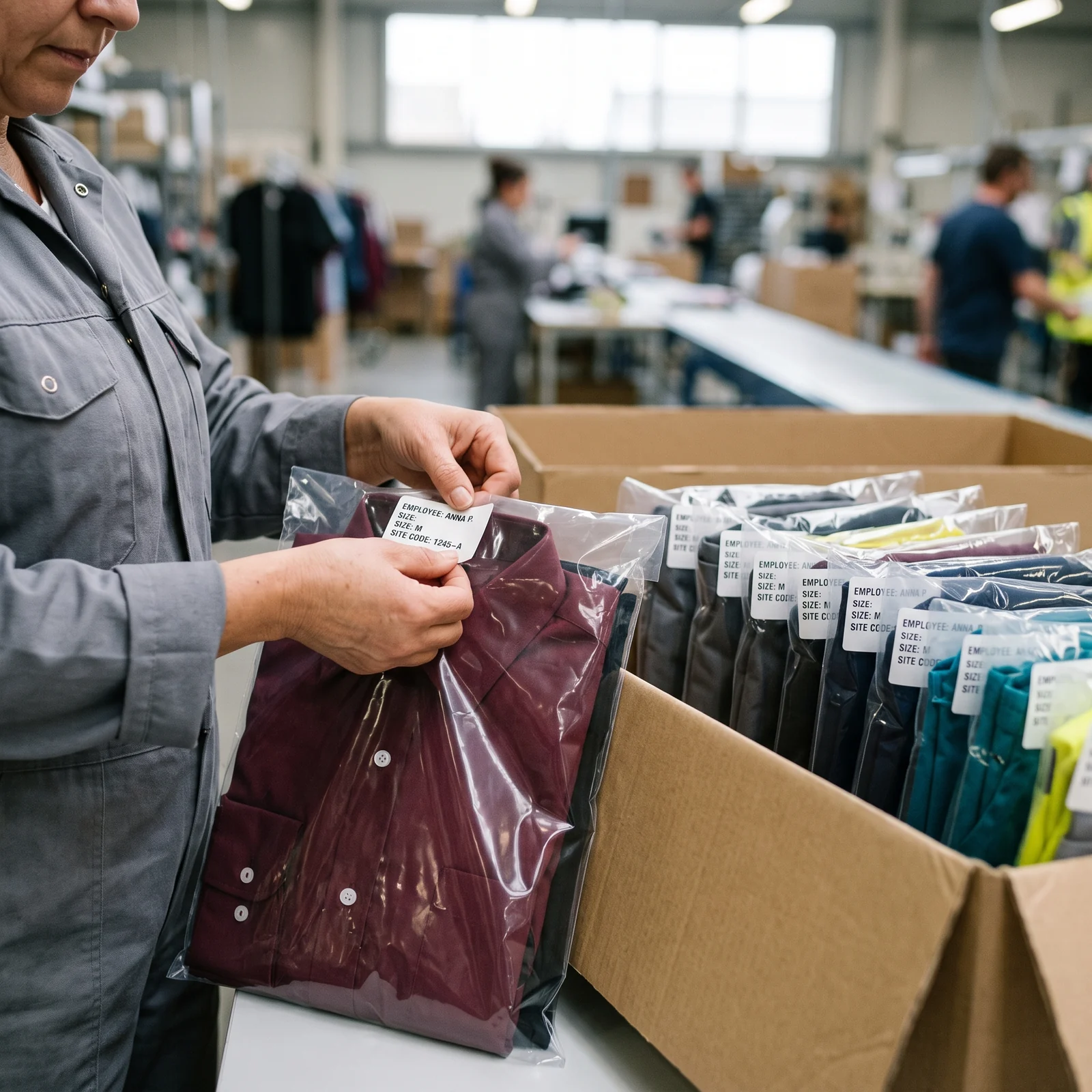
  • Name, size and site label being applied to an individual employee pack

    One staff list drives both the name embroidery and the per-employee packing, so the two can never disagree.

Nothing reaches the cutting tables without two releases: the colour lab's and the pattern room lead's.

09Pattern room

Pattern Room Sign-Off: One Graded Set and One Current File per Style

The pattern room is where a program's fit is fixed, and the first stage with a signature.
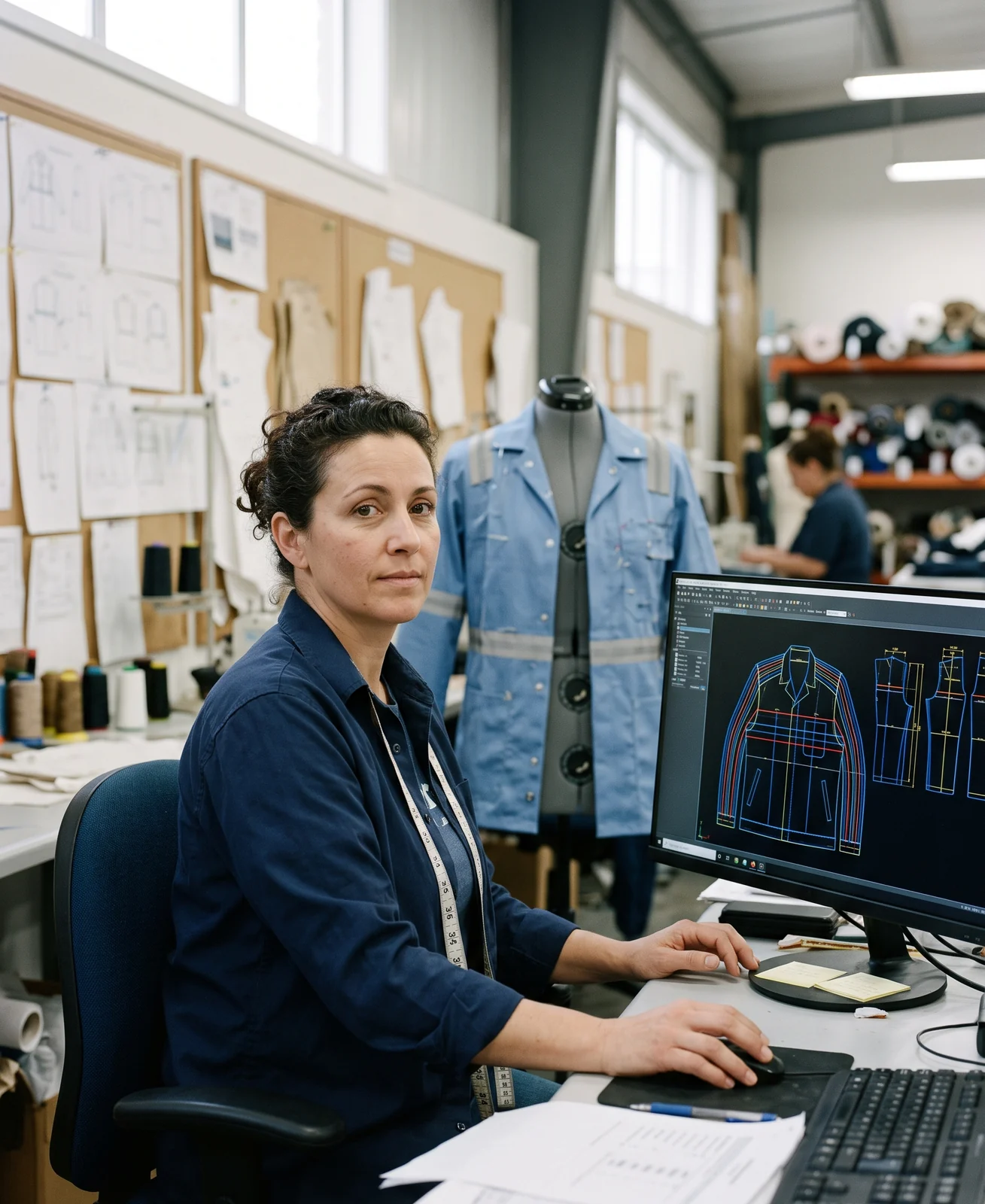
Pattern maker checking a graded pattern on a CAD screen
12pattern makers and technicians, led by the pattern room lead, building in CAD from your tech pack, sample garment or reference photos
Style fileCurrent version
Graded set
Men's and women's cuts, XS–5XL, tall on core styles
Marker
Made in CAD from the graded pattern
Signed against
Your approved sample
Signed by
Pattern room lead

Who signs, and against what

The pattern room lead signs pattern and grading against your approved sample before any fabric is cut. Nothing goes to the cutting tables without that signature.

  1. Sample changedYou revise the approved sample
  2. File re-signedPattern revised, signed again, production clock restarts
  3. Old file retiredOne current version per style for every later re-order

A shirt re-ordered two years into a program is cut from the file signed for the first order, so new hires get the fit your launch staff were measured in.

10Factory floor

Factory Floor: Six Areas in the Order a Garment Moves

Walk the floor in the order the garment does. Each area hands one defined thing to the next.
See any area live on video

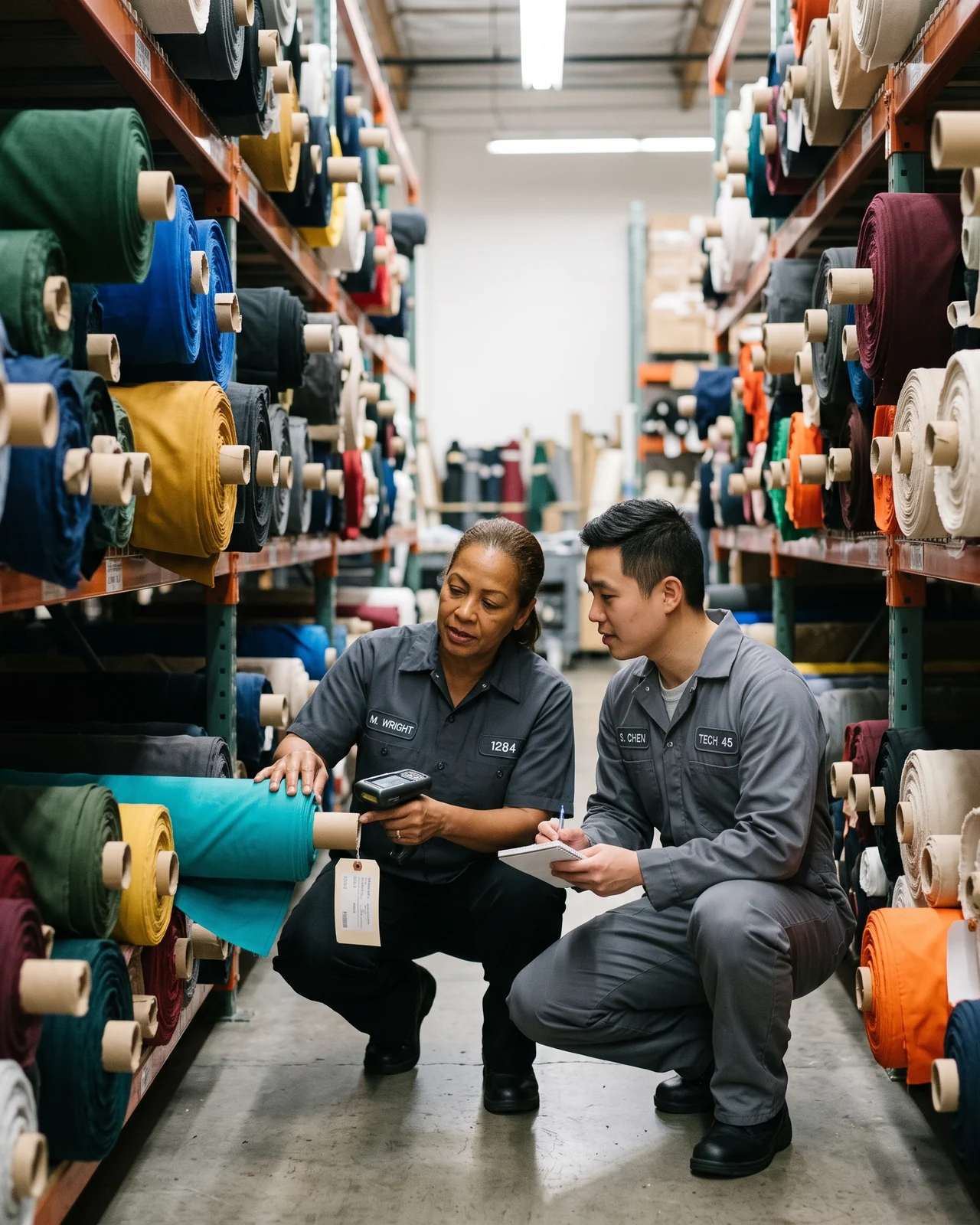
  1. Fabric store with racked rolls and a colour lab technician checking a roll01

    Fabric store & colour lab

    Receives mill fabric and reflective tape; the lab reads re-order rolls.

    Hands on → fabric released for cutting
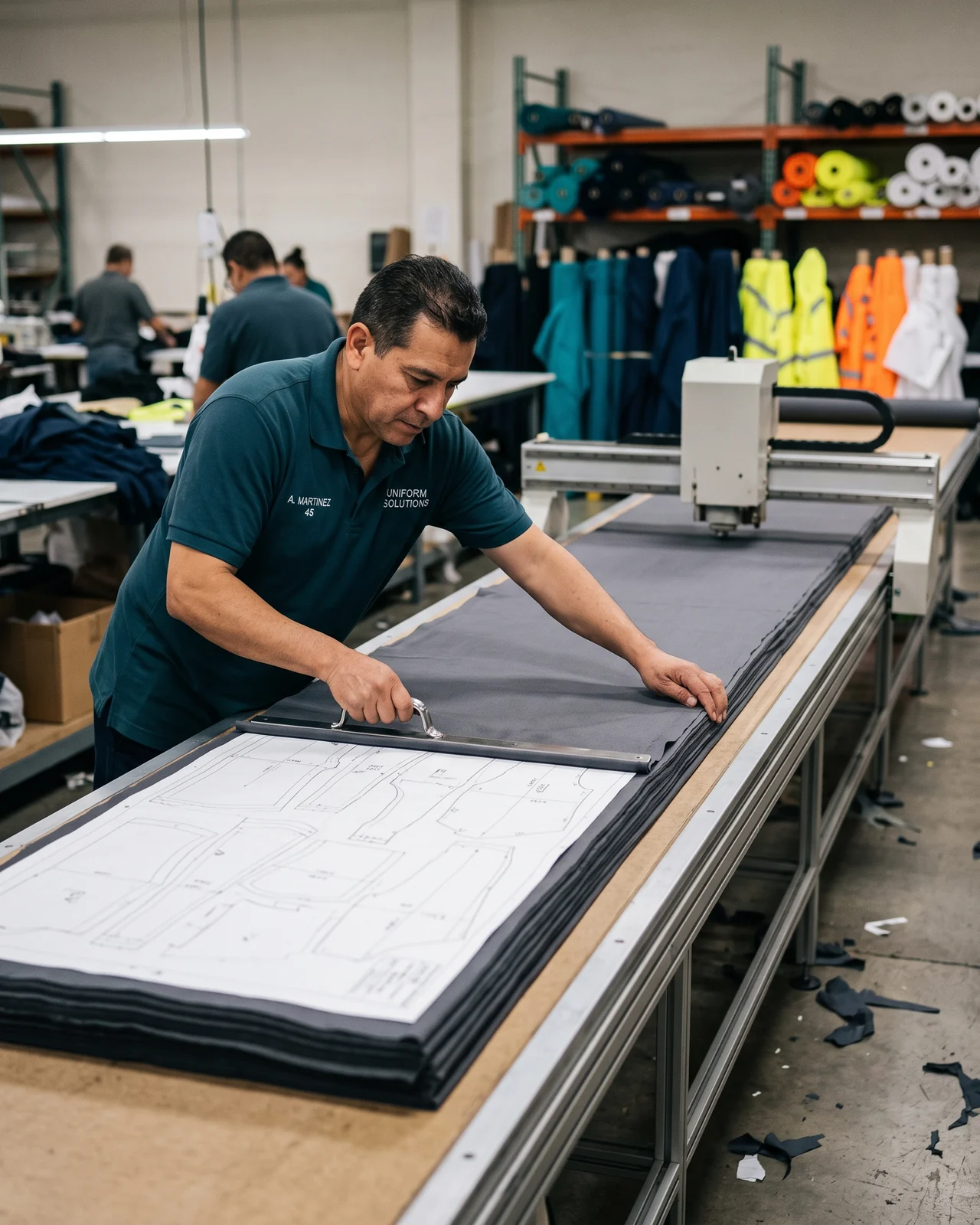
  2. Cutter at an automatic multi-ply cutting table laying fabric02

    Pattern room & cutting

    Makes and signs patterns and markers, then cuts bulk.

    Hands on → panels tagged with style, colour, size, dye lot
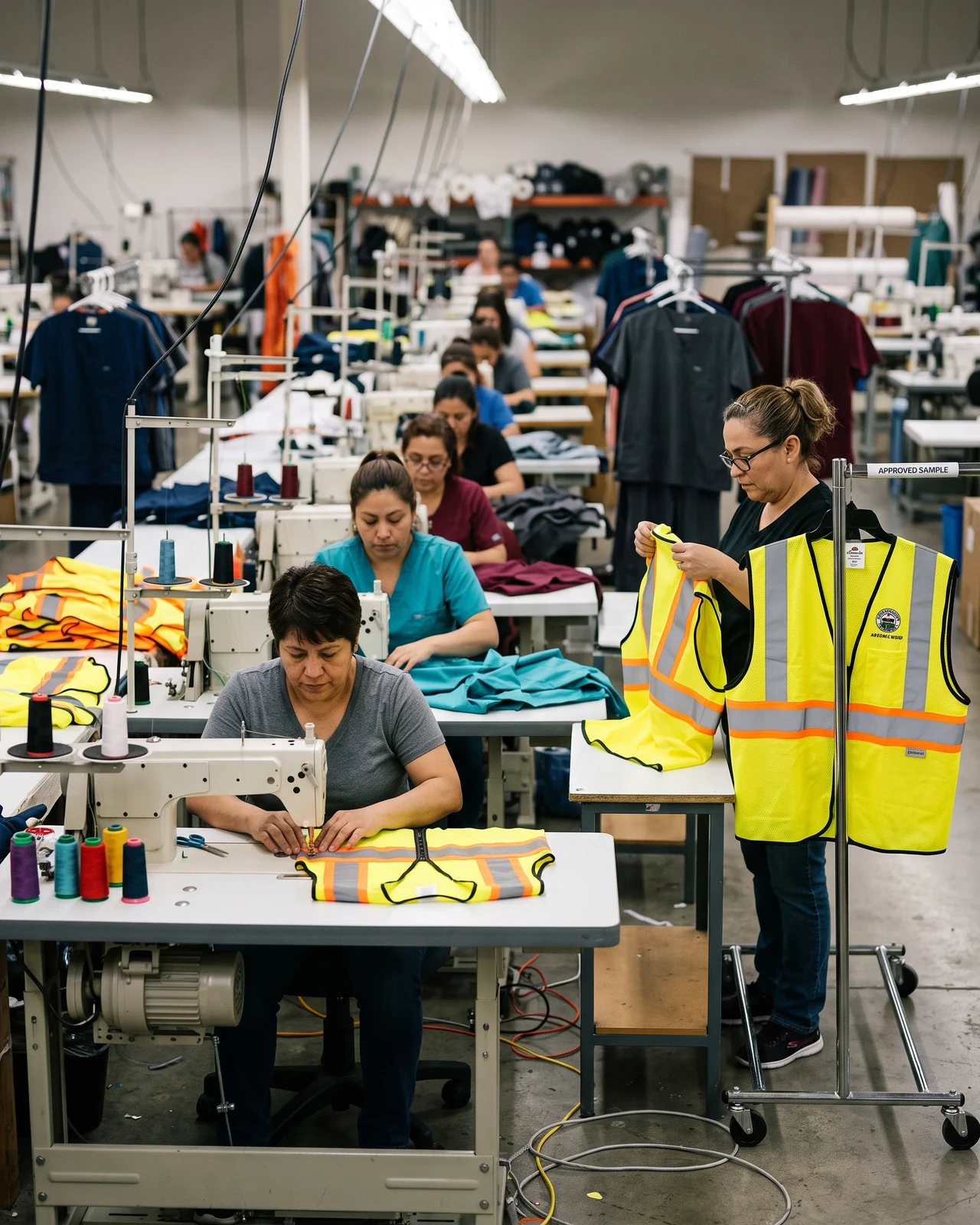
  3. Machinists on a sewing line assembling hi-vis and scrub garments03

    Sewing floor

    Assembles every garment type we make, line by line.

    Hands on → sewn garments from lines with an approved first piece
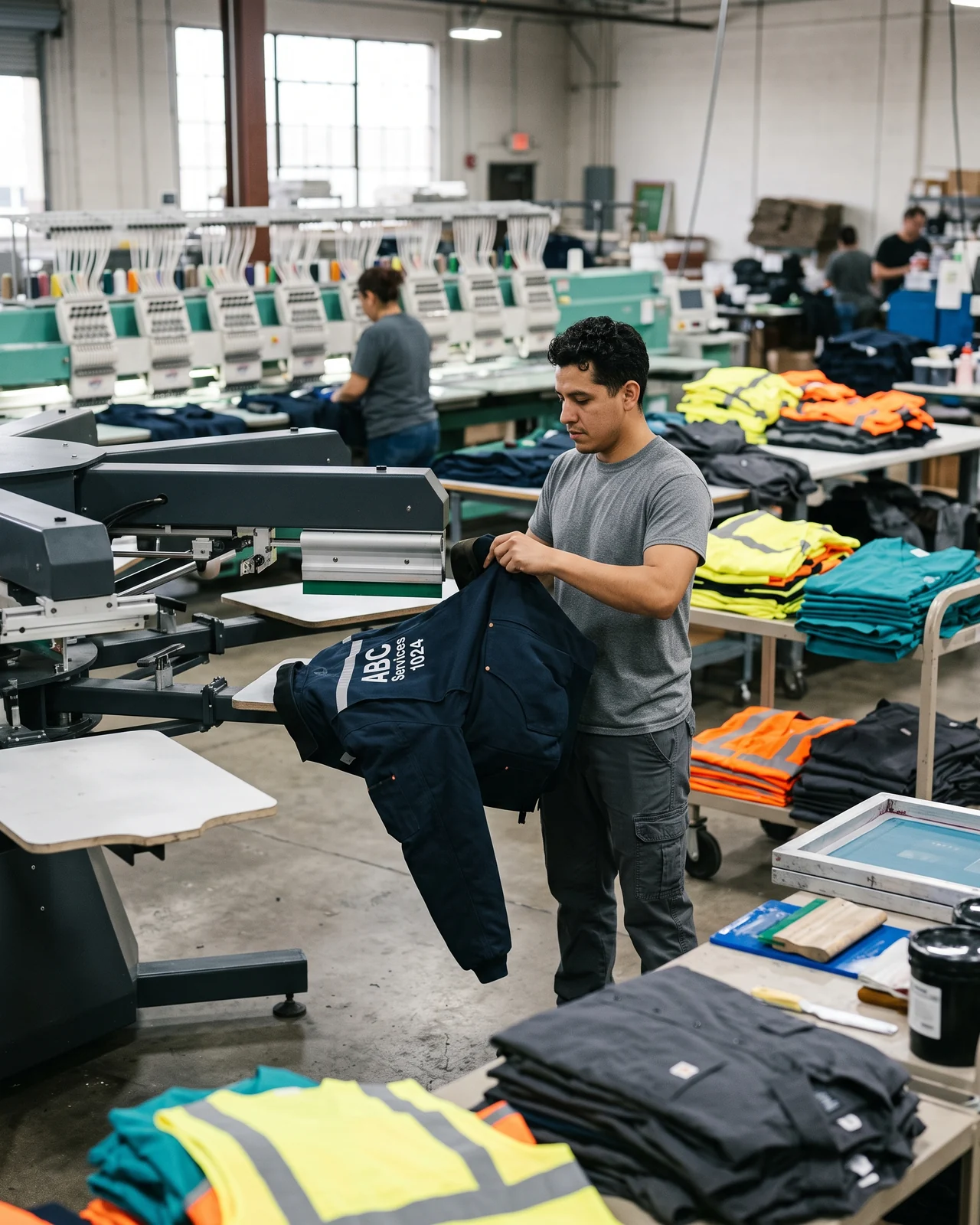
  4. Operator running an automatic carousel screen-print press on work jackets04

    Decoration floor

    Embroidery, screen print, heat transfer and reflective trim.

    Hands on → decorated garments
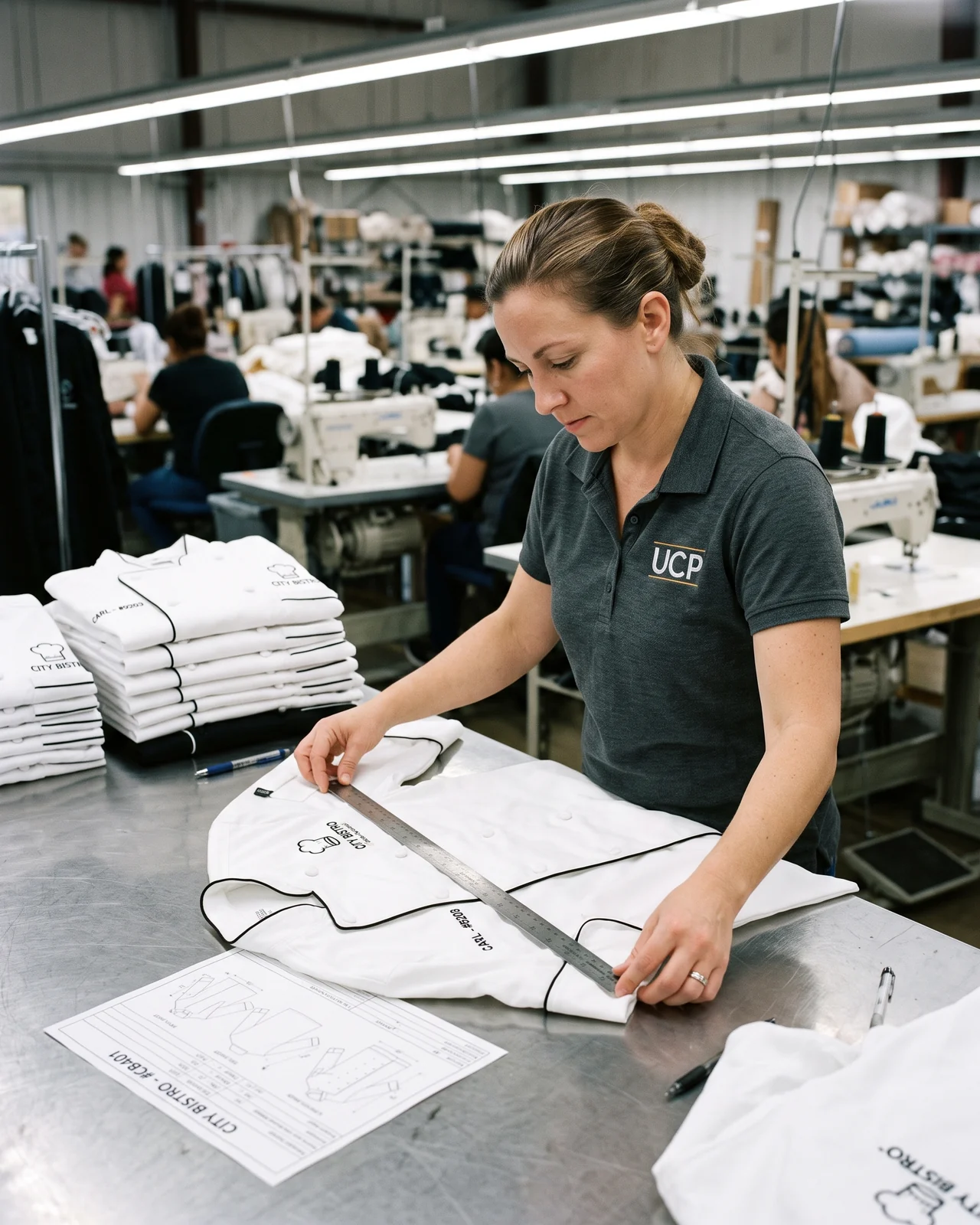
  5. Inspector checking finished uniforms at the final inspection table05

    Final inspection

    The QC manager signs each order's release.

    Hands on → released garments
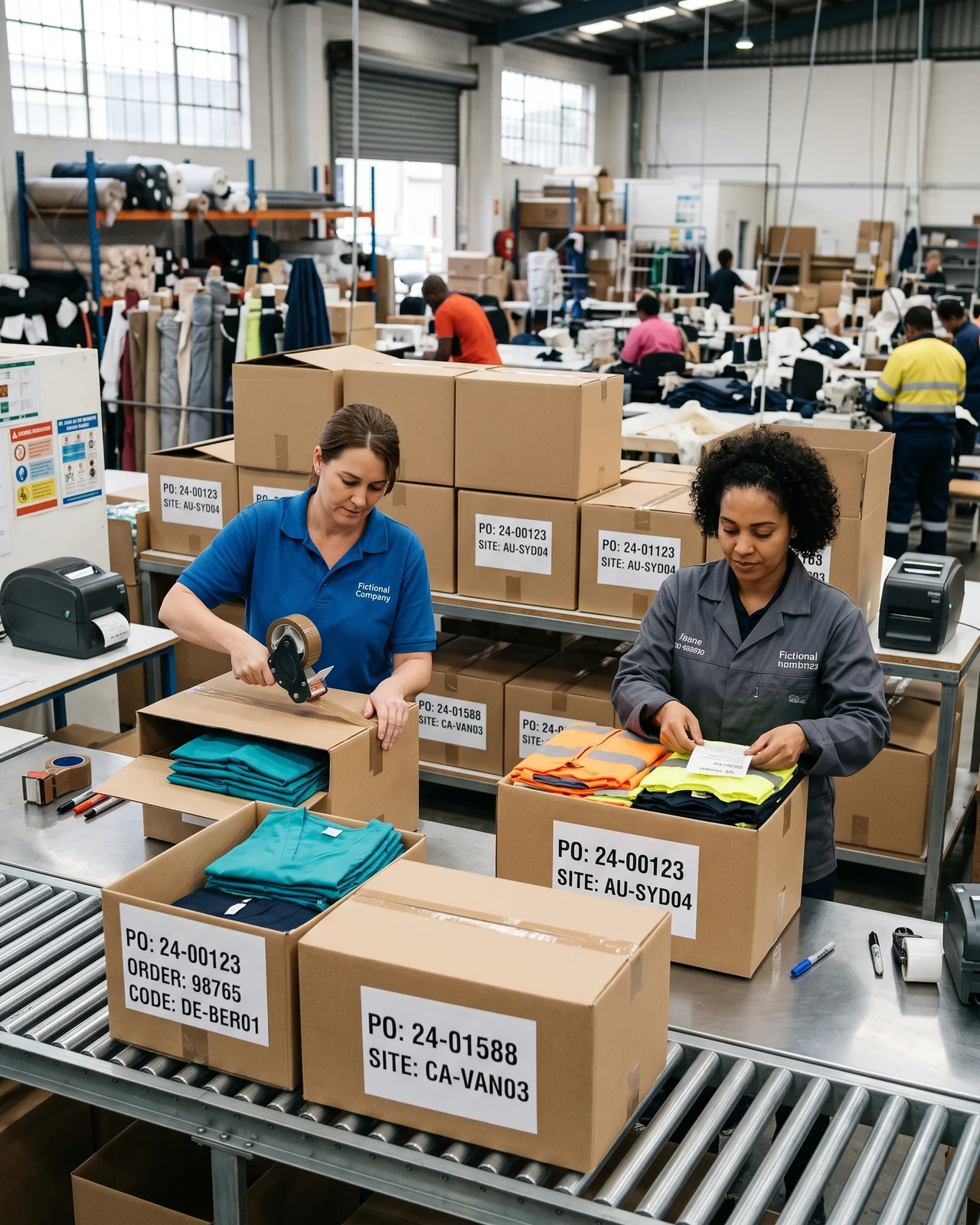
  6. Packers sealing labelled cartons of uniforms on the packing line06

    Packing line

    Packs by carton or per employee and labels every carton.

    Hands on → cartons ready for freight

11Key roles

Five Named Roles, Each Owning One Stage

Five people carry a uniform program through the factory. Each owns one stage and hands one defined thing to the next.
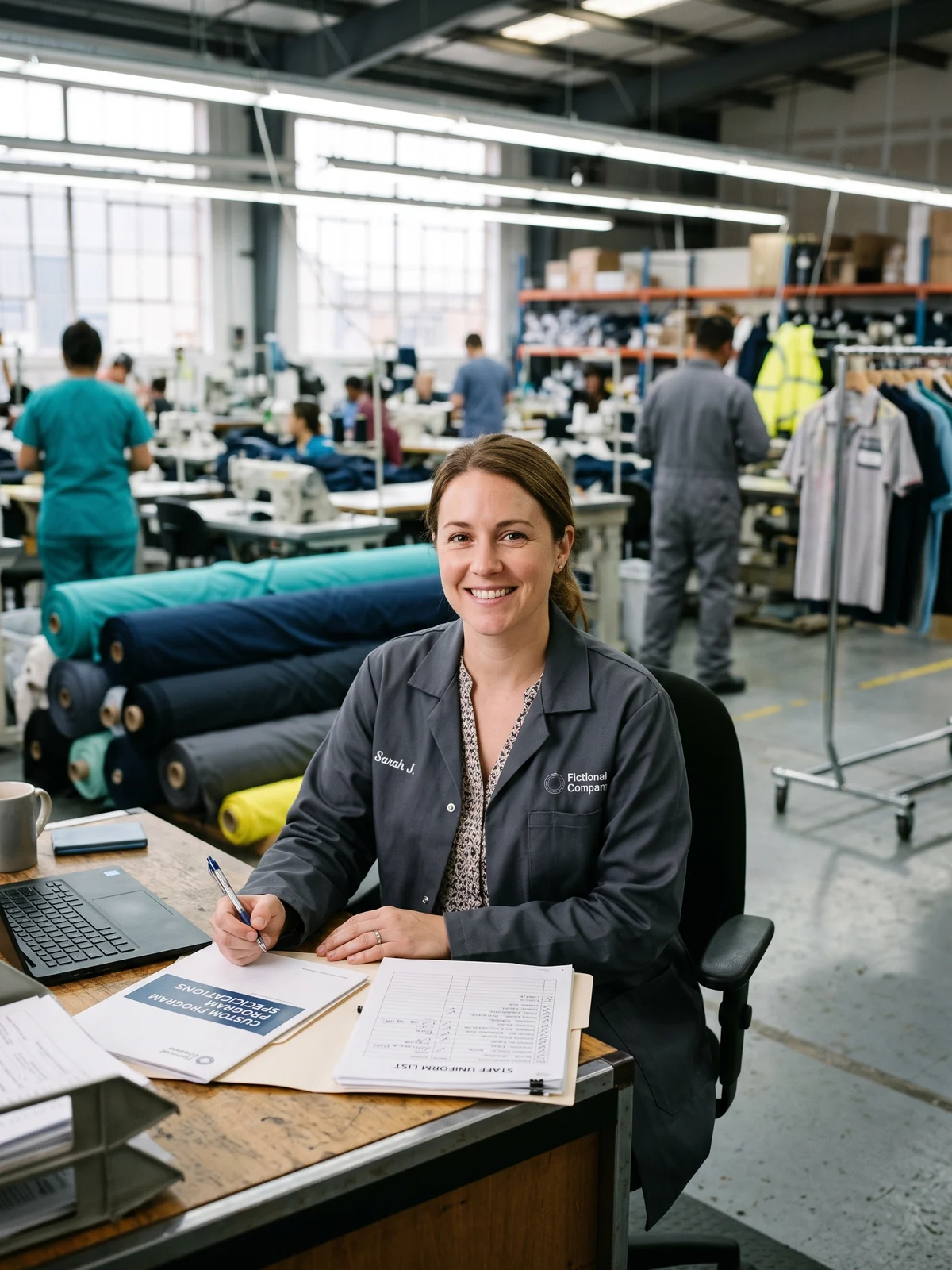
  • Account manager at her desk with a program folder

    Account manager

    Owns
    One program from quote to re-order, routing your inputs to each department
    Hands on
    Confirmed spec, colours and staff list
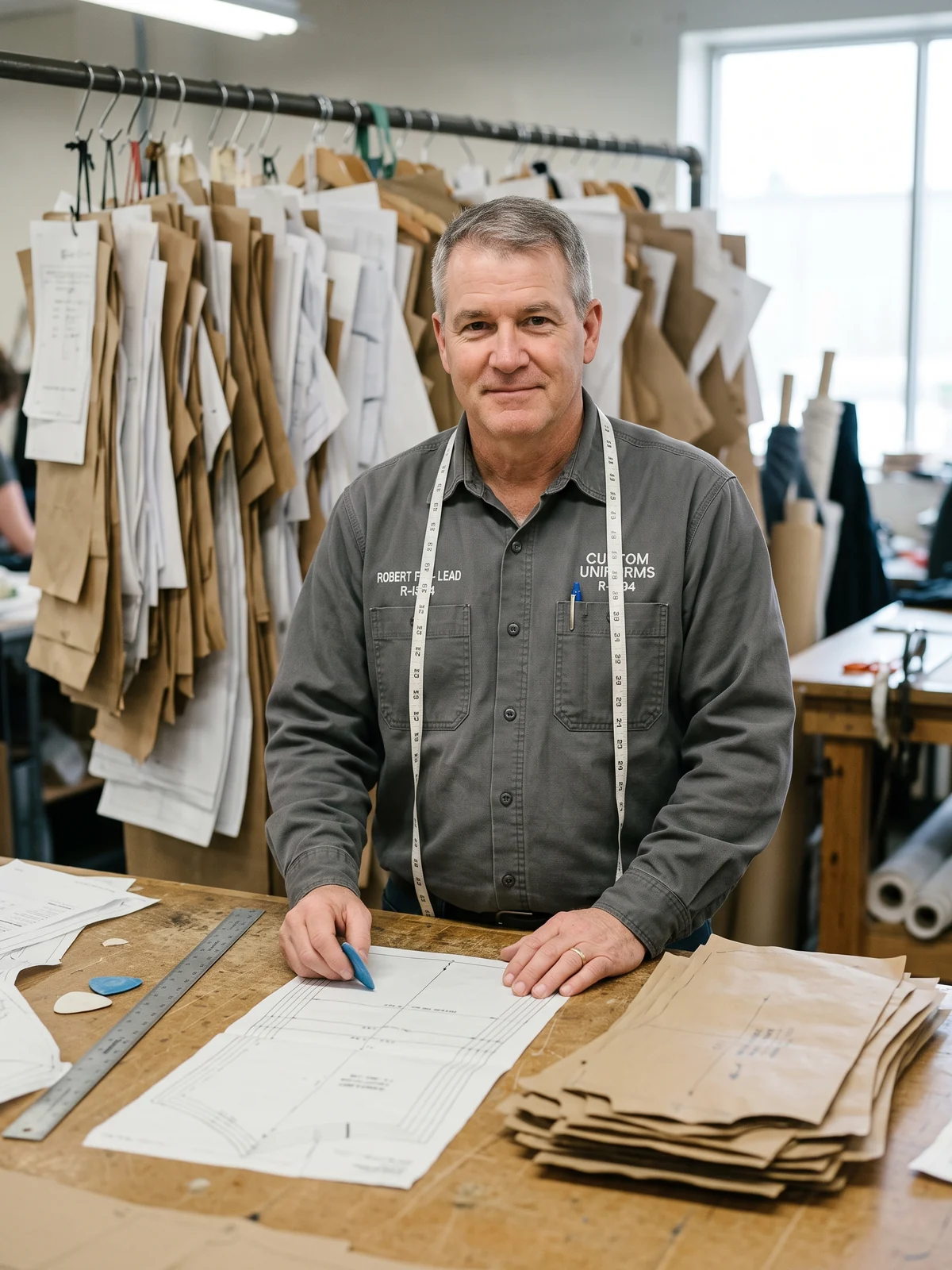
  • Pattern room lead standing at the pattern table

    Pattern room lead

    Owns
    Pattern and grading, signed against the approved sample
    Hands on
    A signed pattern and marker file
  • Colour lab technician holding a lab-dip card in the colour lab

    Colour lab technician

    Owns
    Re-order fabric readings before cutting
    Hands on
    Released fabric, or a hold notice to the account manager
  • Line QC standing at the head of a sewing line with a first piece

    Line QC

    Owns
    Each line's first piece and the inline checks
    Hands on
    Sewn garments from an approved line
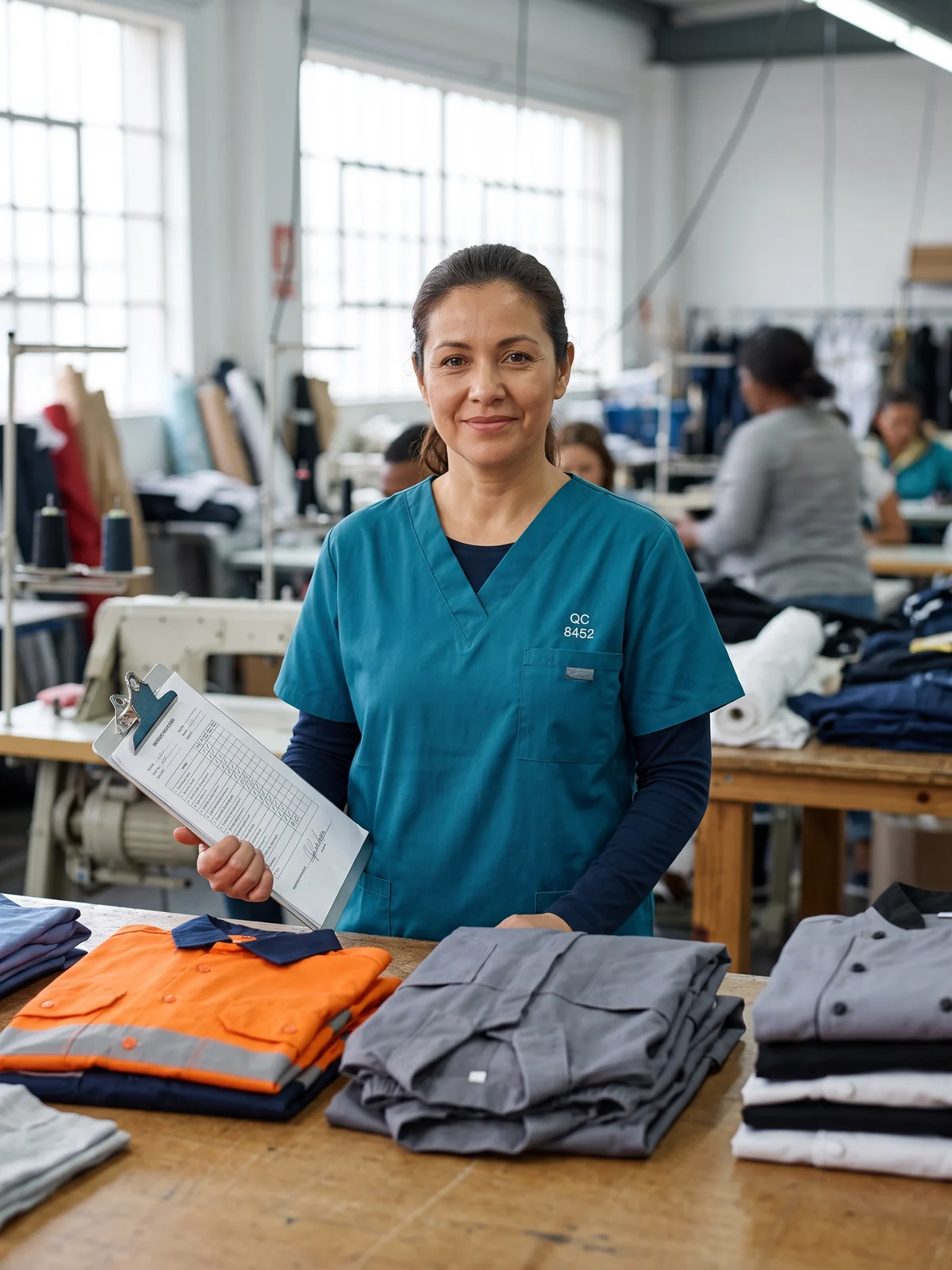
  • QC manager at the final inspection table with an inspection report

    QC manager

    Owns
    The inspection standard and the final release
    Hands on
    A released order and its signed inspection report

Their names reach you on a program contact sheet with your sample plan, re-issued whenever a role holder changes.

12Account manager

One Account Manager Routes Every Input From Quote to Re-Order

You deal with one person from the first quote to the latest re-order. Everything you send goes to the department that uses it.
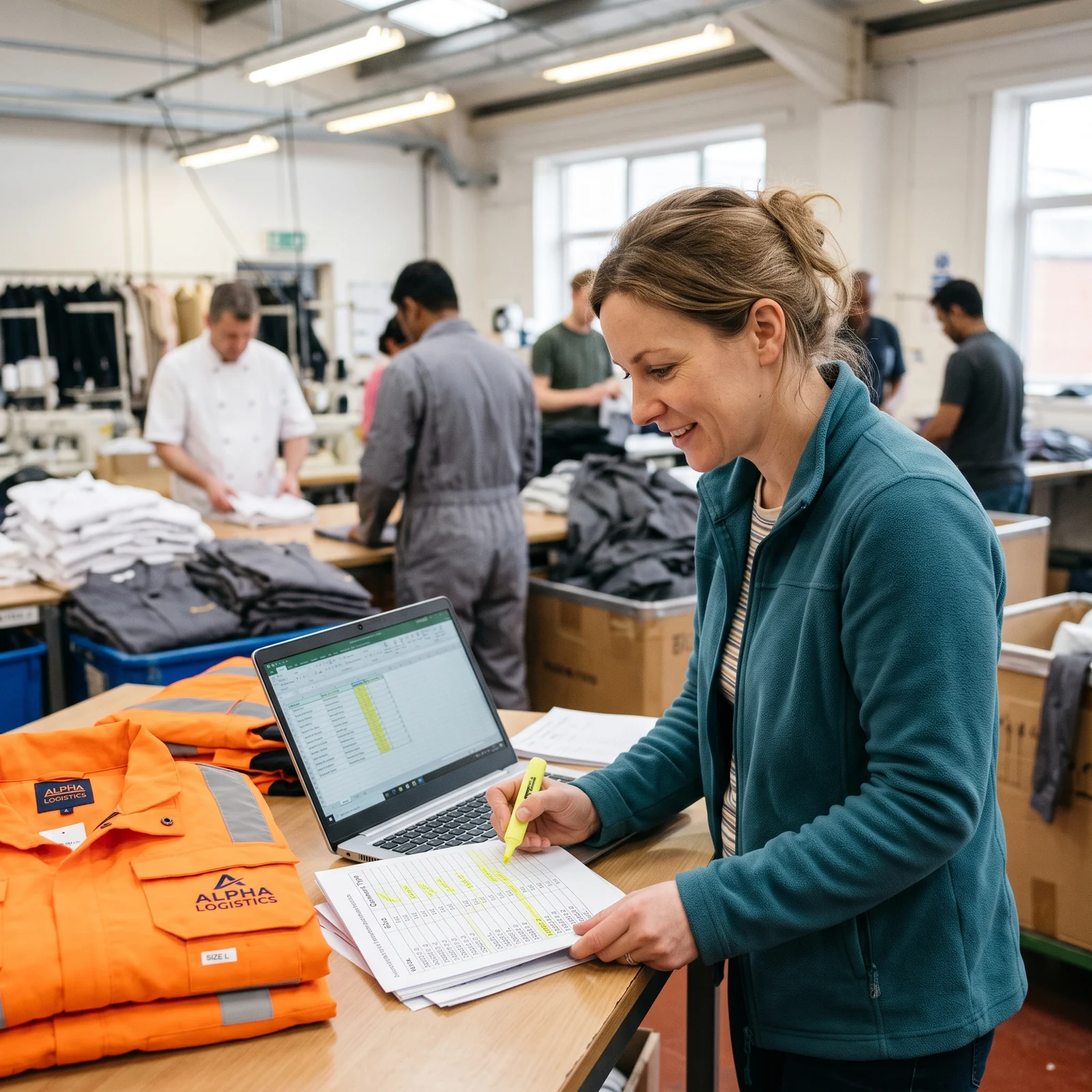
You send It goes to Logo artworkDecoration setup: embroidery, print or heat transfer Style referencesPattern room: tech pack, sample garment or photos Colour referencesColour lab, for lab dips Hi-vis or FR standardThat style's build spec sheet Staff list with names and sizesEmbroidery floor and pack-by-person line Site addressesPacking line, for carton labels
Account manager checking a printed staff list with names and sizes
Account managerOne per program

What comes back to you

  • Written quoteWith a sample plan attached
  • Early spec noticeSuch as logo size against the background of a hi-vis vest
  • Line deviation noticeIf a deviation touches the spec or the ship date
  • Fabric-hold noticeBefore cutting, if a hold moves the date

Everything you send once stays on file for every re-order.

Send Your Garment List for a Written Quote in 1 Business Day

  • SendGarment list
  • SendHeadcount
  • SendDelivery sites
  • SendLogo artwork

13Quality & compliance

ISO 9001, amfori BSCI, OEKO-TEX and the Build Standards Behind Each Garment

Hi-vis and FR garments are built to the named standard, on fabric and tape that carry the mill's test report.

Management & social

ISO 9001 quality management system
Covers how our orders are specified, signed off, inspected and recorded
amfori BSCI audited
Social compliance at our factory; the audit summary is shared on request
OEKO-TEX Standard 100 fabrics available
For healthcare, hospitality and brand programs that specify tested fabric

Garment builds

Mill test reports
For the fabric and reflective tape in every hi-vis and FR build
ANSI/ISEA 107 Class 2 & 3 · EN ISO 20471
Hi-vis builds, with EN ISO 20471 for EU buyers
NFPA 2112 · ASTM F1506 · NFPA 70E
FR builds made from certified FR fabric rated to these standards
Third-party garment testing
Arranged per order when a site or contract asks for a finished-garment test

Certificates available on request.Which document answers which approval requirement

14Quality governance

QC Manager Sets the Standard; Deviations Escalate Within the Shift

One owner for the standard, one reference for every check, and a fixed route for problems.

  1. 01The line stopsA line that finds a deviation stops before it makes more
  2. 02QC manager, same shiftThe stop escalates to the QC manager within the same shift
  3. 03Pieces and restart decidedThe QC manager decides what happens to the affected pieces and when the line restarts
  4. 04You hear within 24 hoursIf the spec or ship date is affected, your account manager calls or emails

Who sets the standard

The QC manager sets each program's inspection standard at sample approval. From that day the approved sample is the reference for every later check, and you receive a signed final inspection report with each order.
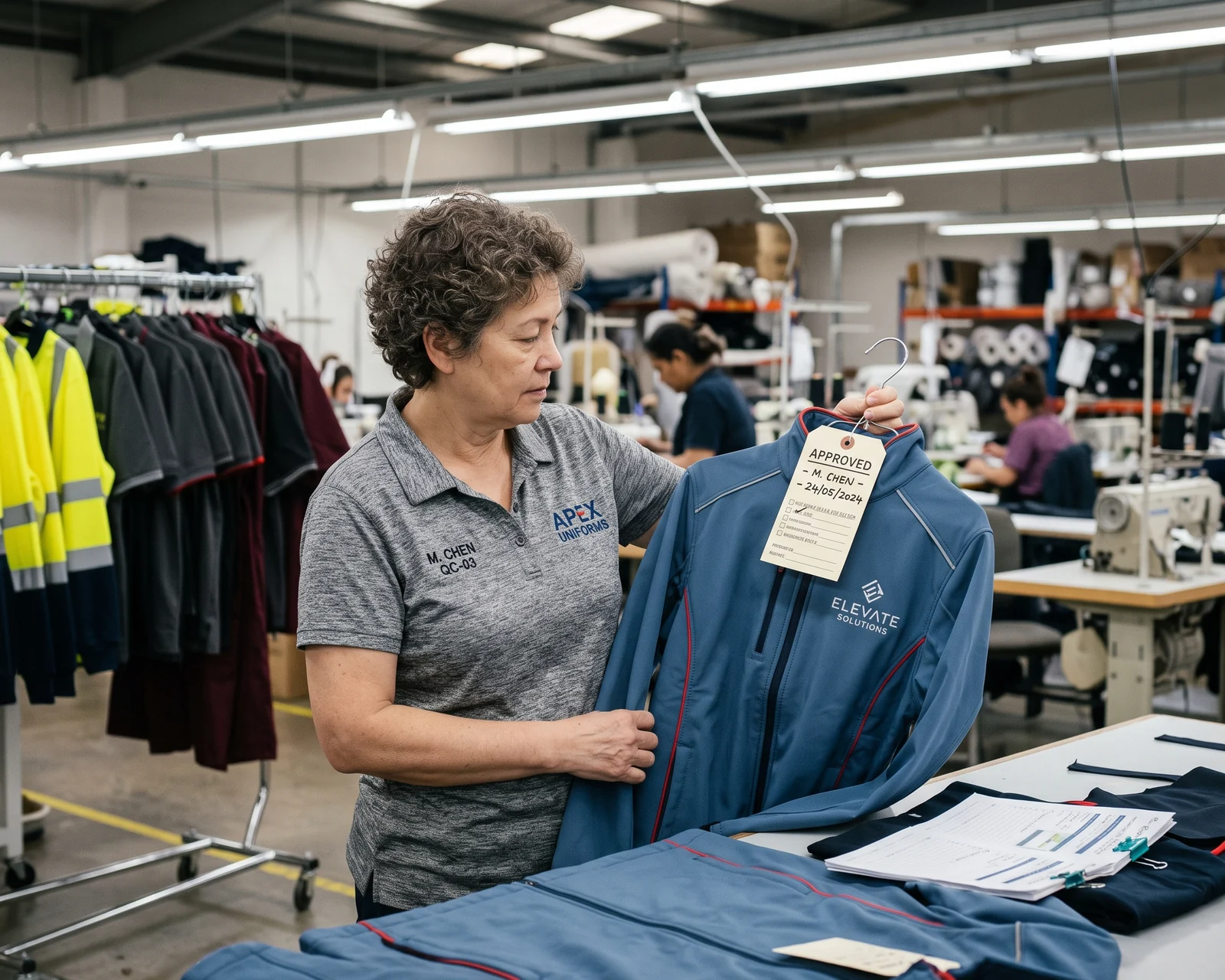
QC manager holding the approved sample on a hanger with its sample tag
One reference · the approved sample
  • Pattern room leadChecks the pattern before cutting
  • Line QCChecks the first piece and inline production
  • QC managerChecks the finished order before release
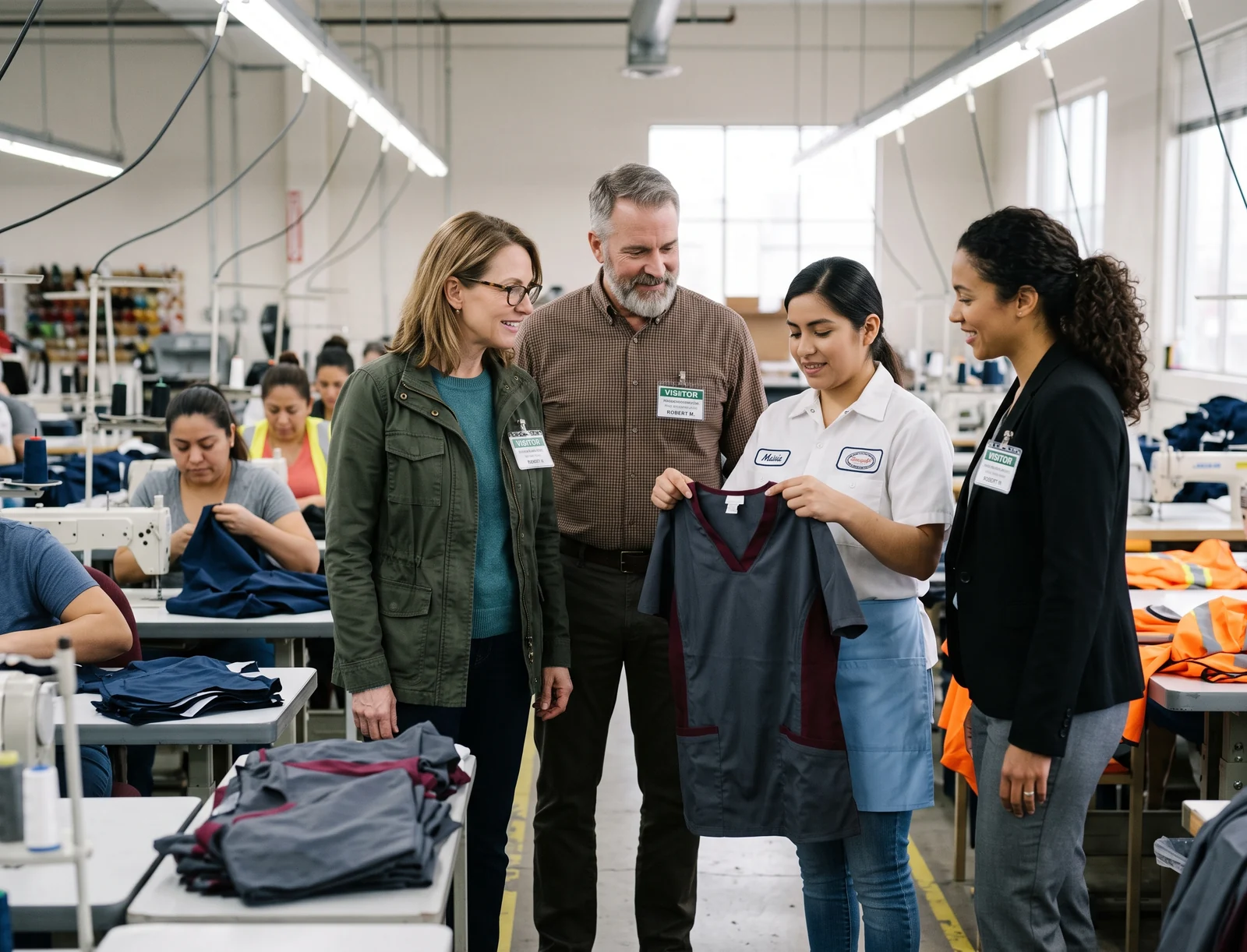
Two buyers and an account manager looking at a first piece beside a sewing line

15Buyer verification

Factory Visits, Live Video Walk-Throughs and the BSCI Audit Summary

  • Factory visitsWalk the fabric store, colour lab, pattern room, sewing and decoration floors, final inspection and packing line.
  • Live video walk-through of any areaYou choose the area; the camera goes there, scheduled within 2 business days at a time inside your working hours.
  • amfori BSCI audit summaryShared for responsible-sourcing and vendor onboarding checks.

Send the checklist your approval process works from, and the visit or call is routed through those areas in that order.

What buyers usually ask to see

  • A spectrophotometer reading against a retained lab dip
  • The marker file for one of your styles
  • A first-piece approval on a line running your style
Book a Visit or Video Walk-Through

16Program records

Six Program Records, Each With a Named Holder

Every active program keeps its records inside the factory. Each one has a named holder, and each one is the reference for a specific check.
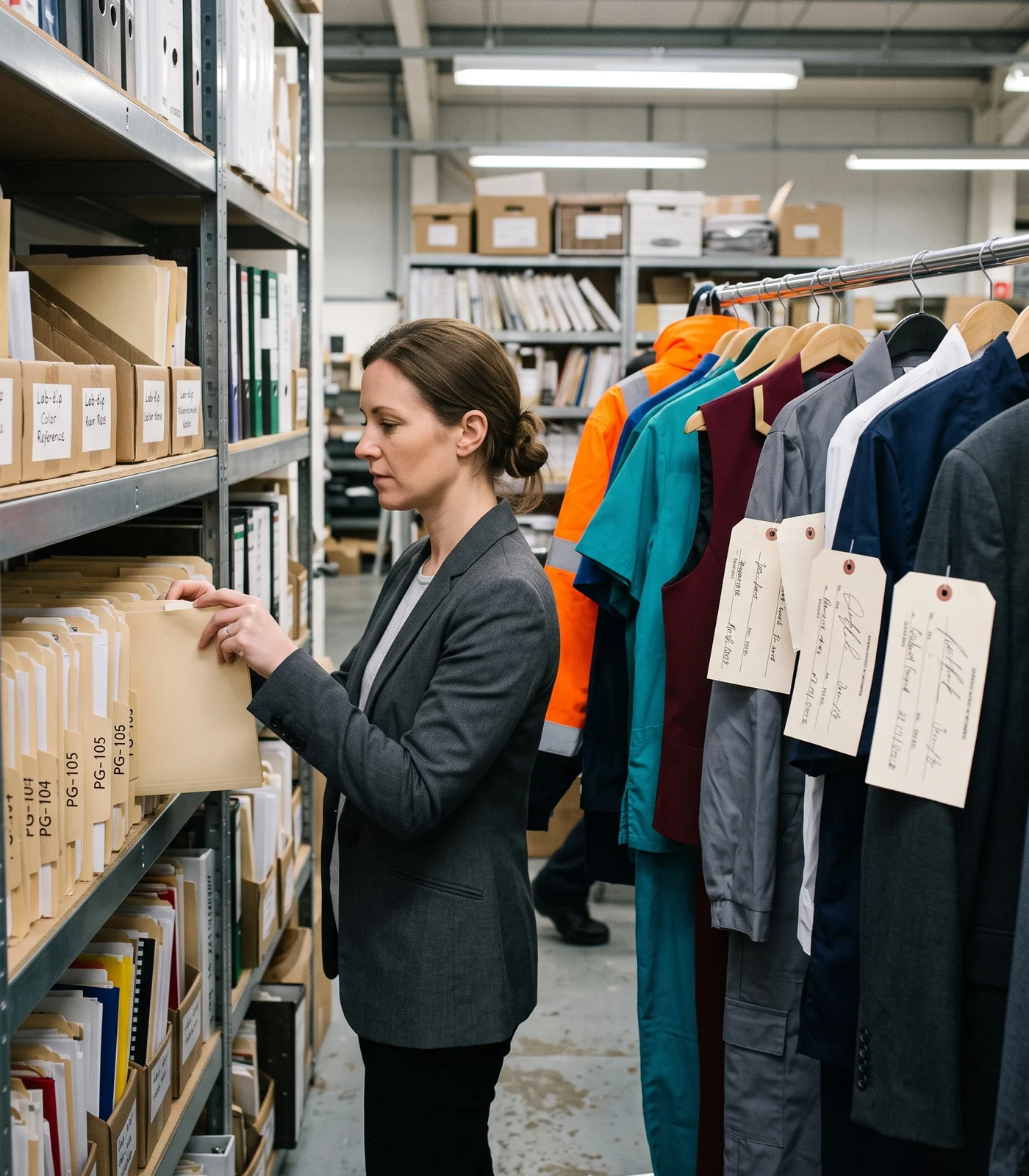
Rail of approved samples and numbered program folders in the records room

If a person changes role, the records stay.

RecordWhat it holdsHeld by
Approved sampleThe reference for every checkQC manager
CAD pattern & marker filesOne per style; re-orders cut from themPattern room lead
Retained lab dips & dye-lot recordsOne lab dip per colour, each delivery's dye lot recorded against itColour lab technician
Build spec sheetsHi-vis and FR: background material, reflective layout, logo position, size and method, thread and trimAccount manager
Staff listNames, sizes and sites for named and pack-by-person programsAccount manager
Final inspection reportsOne signed report per orderQC manager

17Re-orders

Re-Orders Built From the Same Files in Five Steps

On a re-order you send a PO. The factory rebuilds the order from the records it already holds.

  1. 1Account managerConfirms style, colour and quantities against the same staff list.
  2. 2Colour labReads new fabric against the lab dip matched to the last delivery.
  3. 3Pattern roomIssues the same marker file for cutting.
  4. 4Decoration floorWorks from the same build spec sheet.
  5. 5QC managerReleases the order against the same approved sample.

Nothing is re-specified from scratch, so a re-order two years into a program is built exactly like the first delivery.
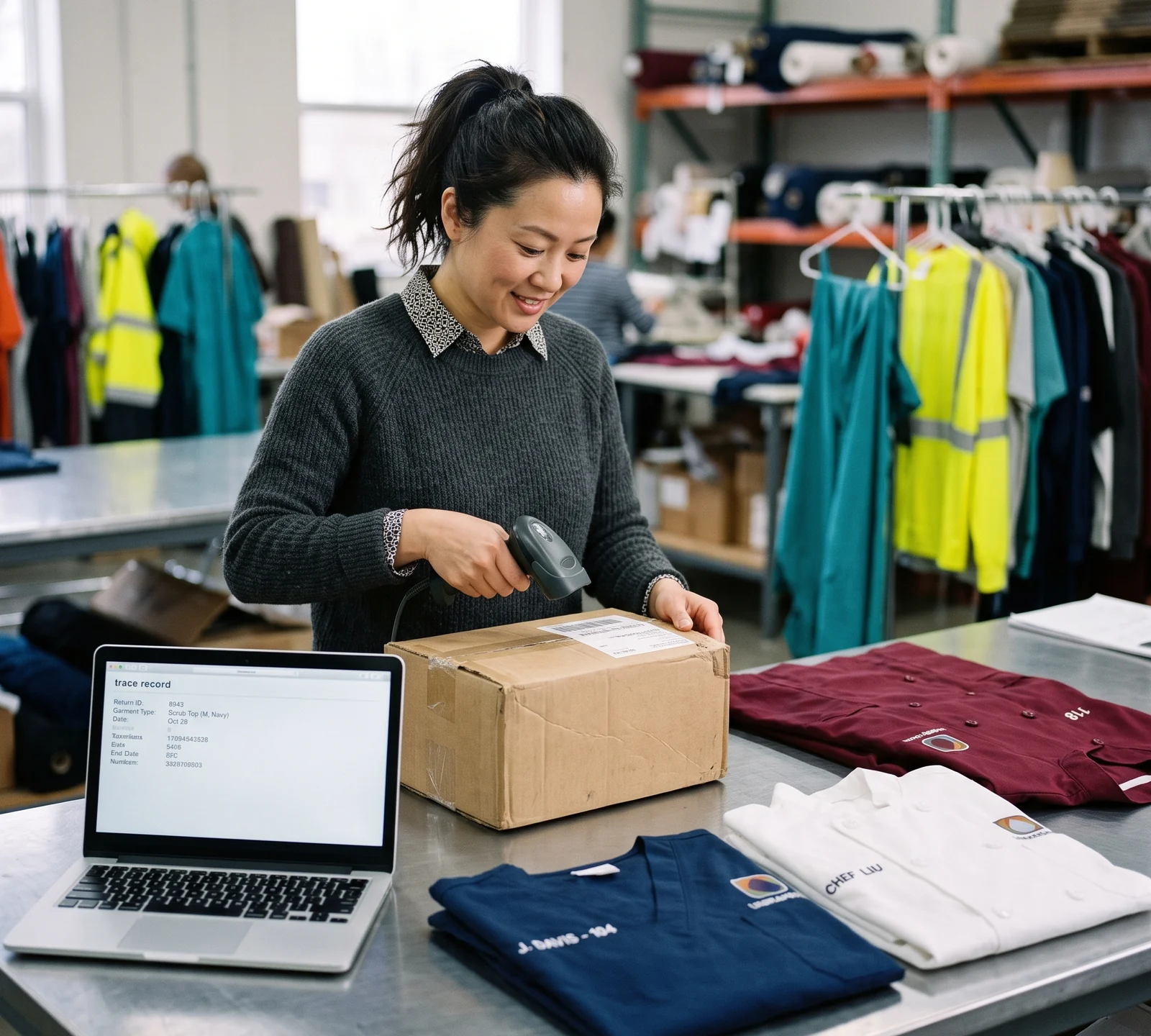
QC manager scanning a carton label to trace its dye lot and sewing line

18After delivery

After-Delivery Issues: Three Roles and One Reference Sample

A reported problem is investigated by the roles that released the order, against the same sample, so the answer rests on records rather than memory.

  • Account manager

    Receives your report with photos or pieces and stays your contact until it is closed.

  • QC manager

    Reads the carton label back to its dye lot, cutting run and sewing line, checks the pieces and writes the root-cause report.

  • Pattern room & colour lab

    Set up any remake from the same marker file and a lab-released fabric batch.

The approved sample that released the order is the reference for judging the reported pieces.

Reporting window, response times and remake terms

Please enter your name.
Please enter your company.
Please enter a valid email address.
Tell us what you need and for how many people.

Start a Factory Conversation

Send your garment list, headcount and delivery sites, and your account manager replies with a written quote and a sample plan. Or ask for a live video walk-through of any area first.

  • Garments and quantities
  • Headcount and delivery sites
  • Logo artwork (AI, EPS or PDF)
  • Areas you want to see on video

Prefer email? sales@customuniformmanufacturer.com